The Authors Book Club

Connecting readers and authors in Canada
  • Announcement
  • About Us
  • Blog Feed
  • Invite An Author
  • Resources
  • FAQ
  • News, Events, etc.
  • Fiona Reads
  • Writers In Trees
  • Contact
  • Tag: The Authors' Book Club

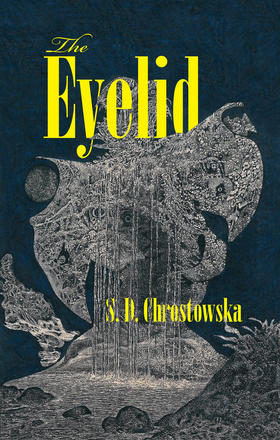
    • The Spotlight Series: The Eyelid by S.D. Chrostowska

      Posted at 1:00 pm by TheAuthorsBookClub
      May 5th

      Featuring Coach House Books

      In slippery, exhilarating, and erudite prose, The Eyelid revels in the camaraderie of free thinking that can only happen on the lam, aiming to rescue a species that can no longer dream.

      We couldn’t wait to ask S.D. Chrostowska a few questions about her new dystopian novel.

      Q. What drew you to write this story?

      A. Resistance to the warped values dominant in our society: the need to cut down on sleep to get ahead and stay ahead, the wish to be “on” 24/7, without downtime if possible, so as not to miss out. Also, the realization that, in a mere matter of decades, our relationship to the material world has fundamentally changed. Humanity pictures itself no longer the rational master of nature, but its nightmare. Humankind is a bad dream. And finally, it was the state of emergency in France and the “political warming” of Western societies. The verities of yesterday no longer comfort and the new conflicts don’t map onto classical ideologies. Many of us are groping in the dark. A fading horizon and social instability favour dreaming dangerously. I’ve come to the conclusion that dreamers, most of whom are neither closet revolutionaries nor terrorists, are our only hope.

      Q. How is ‘daydreaming directly subversive’?

      A. In daydreams, we often claim what reality denies us. We are happier, loved, rich, and famous. No matter how much we can buy to make ourselves happy, our need for happiness, expressed in daydreaming, is not satisfied. The imagination is basically creative. Felicity and optimism have become obligations because we are given the tools to fulfill them: consumer goods, media, pills. Our reveries are to some extent captive to this well-oiled system of gratification and self-fulfillment. They thrive on it. But they also subvert this order by their transgressive nature, their lawlessness, taking what in reality is not ours. Daydreams are not completely bound by the rules of existing society. They slip through its cracks. And if they are not, then they are the imagination’s placeholders for emancipation, mental spaces when we alter reality and can rehearse the good life, the promise of which the market has largely betrayed. The dreaming that interests me is social: dreaming of a better world for all, not just oneself. Social reverie is the imaginative “imperience” of collective freedom to the real experience of oppression.

      Q. What would a state have to gain from eliminating sleep?

      A. Lack of sleep dulls our mind, not just our reflexes. As we let down our guard, we become more available to production and consumption, and politically more docile. Work that is repetitive, mechanical is not too affected. Our choices as consumers are increasingly made for us by the internet anyway. Deprived of sleep, we not only become irritable, we also lose our ability to think and act rationally and critically. More complex mental operations suffer. Coffee and other stimulants might save the day for a while. Without them to compensate for sleep loss, waking life quickly becomes a confusing mess barely held together by routine and habits. Going through the motions, we resemble the autopilot machines we imagine taking over menial work for us so as to liberate our attention for being better consumers, well informed, more up to date, and trendier. The market and thus the state, which is not ideologically neutral, gain by having most brains run at less than their peak capacity while keeping us maximally occupied.

      Until the economy makes inroads into our dreams, sleep remains a restorative withdrawal from the ceaseless solicitation which, for better or for worse, is an integral part of a global economic order that at the end of the day benefits very few. Asleep and dreaming, the affluent and the destitute might resemble each other. Their sleepless nights, however, could hardly be more different. A gulf separates the everyday worries keeping them awake at night. If sleep unites us, insomnia divides us.

      In dream states we are free and suffer no lasting consequences. Human consciousness itself appears to be a kind of dream, an emergent property of the nervous system. Only let’s not fetishize dreams if it means closing our eyes to the miseries of reality. Dreaming is not a solipsistic refuge. But we must sleep on the problems with society before we can find solutions to them. And, to fix things, we need to be awake.

      To read more of The Eyelid, get your copy here!


      S.D. Chrostowska is Professor of Humanities and Social & Political Thought at York University, Toronto. She is the author of Literature on Trial: The Emergence of Critical Discourse in Germany, Poland, and Russia, 1700–1800 (2012); Permission: A Novel (2013); and Matches: A Light Book (2015, 2nd enlarged ed. 2019), and co-editor of Political Uses of Utopia: New Marxist, Anarchist, and Radical Democratic Perspectives (2017). Learn more about S.D. Chrostowska.


      Posted in Guest Authors, Recommended Books | Tagged Coach House Books, S.D. Chrostowska, The Authors' Book Club, The Eyelid
    • So, you want to start a Virtual Book Club?

      Posted at 2:09 pm by TheAuthorsBookClub
      Mar 28th

      Guest post by Hannah Mary McKinnon

      As an author, I’ve had the pleasure of being invited as a guest to a number of book clubs, in person and online. Each time has been an absolute pleasure, and what struck me the most was the camaraderie amongst the members, so much so that I decided to start my own book club earlier this year. 

      Enter the COVID-19 pandemic and social distancing measures, which means in-person book club meetings must be postponed, and it might seem crazy to even think of starting a new club. Except we need human connections and something to look forward to more than ever right now, and a virtual book club could add to the comfort we so desperately need. The solution? A virtual book club. Here are some tips to get you started:

      1. Find members

      You can’t have a book club without members but where to find them? I posted in a local Facebook mom’s group and was immediately inundated with replies. Expecting a handful of participants, I couldn’t believe it when over 60 women indicated their interest. That number settled at 17 members after people couldn’t make it because of family and/or scheduling conflicts. 17 is quite a large number for a virtual book club, and I’d suggest having around 10 members so it’s easier to chat with one another online.

      1. Have an introductory meeting online

      Make it a “meet-and-greet” where you introduce yourselves, chat about the genre of books you enjoy (or don’t care for), and talk about the structure of the group. To do this, use a videoconferencing tool such as Zoom. A “pro” subscription for up to 100 participants per meeting costs $20/month, but maybe one of your members has already signed up, and they can set the meetings up and share the link with the members. Participants can mute their mic when not talking to minimize background noise.

      1. Figure out how to pick books

      In my book club, we decided to have five rotating selections: Book Club Picks, Suspense/Thriller, Women’s Fiction, Historical Fiction and “Wild Card” where anything goes. We plan the books two months ahead, members make suggestions on which we vote afterwards, so people have the chance to look up the books first. Having themes means we read a variety of genres, and don’t have the same one multiple months in a row. Alternatively you could have the host pick the book for the next (online) gathering, or go in alphabetical order instead. Maybe you pluck books out of a (virtual) hat. There are many different ways that allow each member to give input.

      1. Create a Facebook Group

      While I initially managed all communication via email, it was much easier to shift everything to a Facebook group. The group is hidden, meaning only members have access, and I scheduled all our events for the rest of the year. The group is also an easy place to share information about upcoming reads, where to find books, and to create the monthly book pick polls on which members can vote. information about upcoming reads, where to find books, and to create the monthly book pick polls on which members can vote.

      1. Invite authors

      Admittedly, this is easier to do when you’re an author yourself and you’ve made connections with other writers, but you might be surprised by how many authors love to be a guest at a book club. The wonders of technology mean you can beam them straight into your chosen location, again by using Zoom. Whether they charge for their time depends on the author, but regardless, sharing photos and reviews of their novels on social media will no doubt be greatly appreciated. Still unsure about inviting an author?  The Authors’ Book Club provides a list of Canadian writers who are happy to join your meeting—all you need to do is ask.

      Creating a book club has been a wonderful experience and an excellent way to find like-minded friends with whom I can share my love of books. We’re living through an unprecedented crisis, and many of us in isolation, feeling disconnected from the world. A virtual book club might be another way for you to make new online connections, and have a ready-made new set of friends you can meet IRL once the pandemic is over.


      Hannah Mary McKinnon was born in the U.K., grew up in Switzerland and moved to Canada in 2010. After a successful career in recruitment, she quit the corporate world in favor of writing. Sister Dear is Hannah Mary’s fourth novel. She lives in Oakville, ON, with her husband and three sons.

      Visit Hannah Mary’s website. Follow her on Twitter, Instagram, and Facebook.

      Posted in book clubs, Guest Authors | Tagged ann y.k. choi, authors, book clubs, books, canadian authors, canadian book clubs, canadian writers, david albertyn, Fiona Ross, Hannah Mary McKinnon, online book clubs, starting a book club, The Authors' Book Club, virtual book clubs
    • Invite an Author to your Virtual Book Club Meeting!

      Posted at 10:57 am by TheAuthorsBookClub
      Mar 19th

      As everyone struggles to make sense of the COVID-19 outbreak and how to stay safe, a Toronto-based writing group, The 11th Floor Writers, held its March meeting using Google Hangouts. This allowed its members to still “meet” face-to-face and engage in a productive meeting without leaving home.

      Virtual book club meetings with a “visiting” author might be one way for authors and book clubs to connect during these uncertain times. They allow book clubs to invite authors from across Canada. There is an abundance of technology that makes this possible. The key is to figure out which works best for individual book clubs and authors. With the exception of calling the author using a telephone, a virtual author visit requires an Internet connection, audio (speakers and microphones), a webcam, and a projector/computer so that the book club and the author can interact with each other. 

      Google Hangouts:

      To use Google Hangouts, one book club member (the host) needs to sign into a Gmail/Google account and go to Google Hangouts. There, hosts can invite members to be their contacts on Hangouts. They can only invite Gmail email addresses. Once the contacts are added, hosts can start a video chat and invite as many as 25 people to participate. 

      Tip: Hosts can also create a group of contacts to make inviting online book club members more efficient. While they can do all this through the web browser, they can also download the Google Hangouts app on any device and use the service that way, all of which is free. The drawback is that everyone involved in the chat must have a Google account, including the author.

      Other options that most of our authors use include Skype, FaceTime, and conference calling.

      Group Video Chat via Skype: 

      What you will need: The Skype app on a smartphone or computer.

      Benefits: Easy for group chats; (up to 50 participants); free.

      Cons: Video connection depends on your Internet connectivity (a slow or intermittent connection can lead to frozen screens or glitches).

      Learn more: Visit Skype’s website.  

      Group FaceTime:

      What you will need: iPhone, iPad or Mac desktop or laptop.

      Benefits: Picture-in-picture allows book clubs and authors to view each other (up to 32 participants); free.

      Cons: FaceTime is incompatible with non-Apple devices.

      Learn more: Visit Apple’s website.

      Conference calls: 

      What you will need: A phone with a speaker.

      Benefits: No need for any other technology/tech set–up.

      Cons: Book clubs and authors cannot view each other; long distance fees may apply.

      Etiquette for virtual meetings:

      • Test all technology before the meeting
      • Introduce everyone at the book club meeting to the author
      • Select a quiet area, free from distractions
      • Ensure all cell phones are on silent
      • Stick to your predetermined author visit time

      Some final tips for book clubs:

      Select one person to be the author’s key contact. Prepare for the virtual visit. Predetermine how long the visit will be (30-45 mins). Take into account any different time zones. Pick a format (e.g., do you want the author to read? Key talking points? Q&A?). Find out about any author fees or requests. Check the quality of your Internet connection, as well as the camera and sound. Have fun!

      Some final tips for authors:

      Check the quality of your Internet connection beforehand. Confirm your meeting times and the length of the online visit ahead of time. Discuss any author fees if applicable.

      If this is your first virtual book club, practise! Look at the camera and not the screen. This will allow you to look out at the book club members. Ensure the space is quiet with minimal background distractions. Avoid interruptions. Turn off your cell phone and let others around you know that you are working. Have fun!

      We’d love to hear from you!

      Share your virtual book club meeting experiences! Tag us on social media using the hashtags #theauthorsbookclub and #inviteanauthor, or email us at theauthorsbookclub@gmail.com.

      Thank you and Happy Reading, everyone!

      Posted in book clubs, General | Tagged ann y.k. choi, book clubs, books, canadian authors, canadian book clubs, Canadian books, CanLit, david albertyn, Fiona Ross, The Authors' Book Club, virtual meetings
    • Skype Visit with Author Jesse Thistle

      Posted at 9:29 pm by TheAuthorsBookClub
      Mar 16th

      Guest post by Toni Duval

      Our book club met on a Friday evening in a lovely country home in Caledon. We planned to connect with Jesse Thistle, author of From the Ashes via Skype, a process that was simple in concept but proved to be a challenge! But we overcame it together. Seated around a large television screen, our author appeared in a hoodie surrounded by darkness. We learned he was on his way home from a spa day and was Skyping from his car while his wife, Lucie, drove them home. 

      We jumped right in with questions for Jesse, almost as if he was sitting in the living room with us. He answered personal questions about the editing process, his mentors, family members, current work and future projects. We were able to share some of our own personal connections to the book. He was gracious with our praise and admiration of his perseverance. 

      Jesse explained how the book began as a part of his steps towards sobriety and how the editors made choices about the material that became the final manuscript, choices he didn’t always agree with and shared a pivotal moment of his life with us. While he was living in Ottawa he begged on the streets for money to buy food. There was a man he saw often who finally introduced himself. He was a podiatrist and offered to get Jesse shoes that would help with his gait. Jesse would not accept the shoes, knowing he would sell them for drugs and wouldn’t allow himself to take advantage of the man’s kindness. 

      Overall, the experience of speaking directly to the author of a book that resonated with all of us was powerful. It is due to Jesse’s generosity with his time. We probably spoke to him twice as long as originally planned. His willingness to share his time and insights with us allowed us to experience a special evening beyond compare. 


      Toni Duval is a member of the Caledon Women’s Book Club.

      Jesse Thistle’s memoir, From the Ashes, was published by Simon & Schuster Canada. He lives in Hamilton, ON, and is available to meet with book clubs via Skype and FaceTime. Learn more about Jesse.

      Posted in book clubs, Recommended Books | Tagged book clubs, canadian authors, canadian book clubs, Canadian books, From the Ashes, Invite An Author, Jesse Thistle, Skyping, The Authors' Book Club, Toni Duval
    • What makes a cozy mystery a great choice for a book club?

      Posted at 9:33 am by TheAuthorsBookClub
      Mar 10th

      Guest post by Lynn McPherson

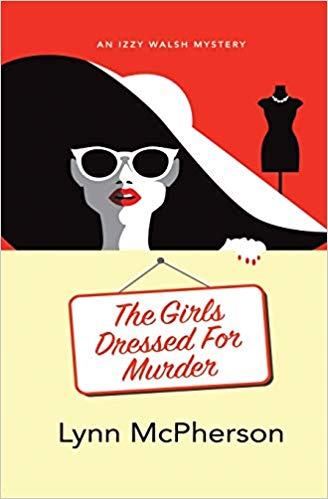
      The Girls Dressed for Murder is a light-hearted, character-driven whodunit set along the New England coastline in the 1950’s. It is the third book in the Izzy Walsh Mystery Series and belongs to a sub-genre of crime fiction called Cozy Mystery. You may want to know the characteristics that define a cozy before choosing one for your book club. Let’s take a look.

      First of all, the violence is done primarily off-stage. There are no gory details in any part of the novel—even the murder itself. In addition, cozy mysteries usually take place in a small town with an amateur sleuth as the protagonist. They are always whodunits and often incorporate a cast of recurring characters in an ongoing series. In The Girls Dressed For Murder, the central characters are all women who befriended one another during the Second World War while working in a munitions factory. Izzy Walsh relies heavily on the support and insight of her friends to help unravel the twisted truth in every case she stumbles upon. 

      Cozy mysteries are a lot of fun. You will shed no tears or experience any restless nights due to disturbing images. At the end of each book, justice has been served and order has been restored. While the books may be a part of a series, each one is a complete novel with no loose ends. 

      What makes a cozy mystery a great choice for a book club? 

      Like any novel, loads of research must be done to get it right. The Girls Dressed for Murder is set in 1958. The clothing, dialogue, cars, and setting were all carefully chosen. Pop culture is rarely the focus of history books, so a discussion of research is always fun. For example, some of the best insights I found were online in old magazines. Thanks to Google, every issue of LIFE magazine is archived. Both the articles and the advertisements were key to help me create the perfect fictional world for my books.

      Let’s not forget the mystery. The best part of a cozy is trying to figure out who is the murderer. A cozy will keep you on your toes. Red herrings and real clues are sprinkled throughout the story—the reader must step into the detective’s shoes to figure out who to trust and where to look.

      So what will you discuss at your next book club if you choose a cozy? Will it be the murder? The characters? The research? Any or all will guarantee an evening full of laughter and fun. 


      Lynn McPherson has worked for the Royal Canadian Mounted Police, ran a small business, and taught English across the globe. She has travelled the world solo, where her daring spirit has led her to jump out of airplanes, dive with sharks, and learn she would never master a surfboard. Lynn serves on the Crime Writers of Canada Board of Directors, currently representing Toronto and Southwestern Ontario, and is the author of the Izzy Walsh Mystery Series. Her latest book, The Girls Dressed For Murder, came out in August 2019.

      Visit Lynn’s website. Follow her on Twitter, Instagram, and Facebook.

      Posted in Guest Authors, Recommended Books | Tagged book clubs, canadian authors, canadian book clubs, cozy mystery, mystery, The Authors' Book Club, The Girls Dressed For Murder
    • A Writer’s Work is Never Done

      Posted at 9:11 pm by TheAuthorsBookClub
      Mar 3rd

      Guest post by Maria Meindl

      My first novel The Work is about a woman who falls in love with the charismatic leader of a theatre group and stays with him for two decades, even though — at least on the surface of things — there’s not a lot in it for her. The question I get asked most often is whether it’s based on personal experience.

      The answer is, yes and no. 

      Have I stayed fruitlessly loyal for years and years? Ooooooh yeah!  And I wanted to get inside that experience in The Work. I have lived through a prolonged romantic obsession; I see these sorts of relationships around me all the time, but they’re not common in literature. They’re difficult to write about. I guess a short, self-destructive love affair provides a better story arc. Yet I’m fascinated with what makes a person stay and stay and stay … and stay. What is she getting out of it?

      Rebecca, my protagonist, is competent — too competent at times — yet she falls prey to someone who manipulates and takes advantage of her. I tried to understand what, in her personality, might make her susceptible, but mostly I wanted to show that anyone is susceptible. 

      And what about the theatre group, SenseInSound, which functions on the borderline between therapy and self-expression, and has many cult-like qualities? I teach a form of movement (Feldenkrais Technique), which required a long, intensive training, and I’ve also participated in various of disciplines that unite body and mind. (And by the way, they’re almost always referred to as The Work.) In my PhD research I’m studying the history of physical culture in 19th and 20th century Europe, so I know the territory.

      I have never had an experience where a leader or teacher abused their power — or not seriously — but I know it happens. And I absolutely see how it can. I drew from my own experiences then speculated … What if…?  What if someone crossed the line right now?

      But I didn’t want to make this aspect of the story cut-and-dried. I didn’t want to show a cult leader pulling people into his orbit and spitting them out as broken souls. People benefit from The Work, or at least, they find a way to present their experiences in a positive light. In the end, The Work is the main character in The Work. It’s beneficial in small doses, but when people entangle themselves with it too closely, it becomes harmful. 

      The theatre company spends a long time in process, continually reshaping its plays, building them, then tearing them down and rebuilding them again. These sections of my book almost wrote themselves, and I think that’s because I love process so much. 

      My fascination with process is the inspiration behind my reading series, Draft, which I founded in 2005 in the Leslieville area of Toronto. We invite both emerging and well-known authors to share their work-in-progress at the readings. Reading new work to a sympathetic audience can sometimes provide more ideas for revision than ten pages of comments. And for the audience, there’s something special about hearing work that is unfinished. It means that you are actually part of the author’s process. You’re part of the writing.

      It took me a long time to write my novel — not because I was keeping some kind of noble distance until it was ready to be shared, but because I couldn’t seem to make The Work work. Of course I got impatient, because I kept running out of money and wanting to do other projects. From an artistic point of view, though, I enjoyed my long engagement with The Work. I prefer being in process to finishing a project. I could have kept on changing the book forever, but I knew it was time finally to polish it up and move on. 

      The Work is the first part of a trilogy, which moves backwards in time. It looks at The Work in different eras. One book takes place in England in the 1950s, and the other is divided between Berlin in the 1930s and 1980s California. These prequels show The Work not just in different, eras but in the hands of different practitioners, and they draw on the historical research I’ve been doing for my PhD. As a writer, I find this daunting project reassuring. It’s always good to know there’s plenty of Work on the horizon!


      Maria is the author of The Work. Her first book, Outside the Box from McGill-Queen’s University Press, won the Alison Prentice Award for Women’s History. Her essays, fiction and poetry have appeared in many publications including The Literary Review of Canada,  Descant and Musicworks, as well as in the anthologies, At the End of Life: True Stories About How We Die and The M Word: Conversations About Motherhood. She has made two radio series, Parent Care, and Remembering Polio for CBC Ideas.

      From 1993 to 2010 she ran The Writing Space Press with Diana Kiesners. She was a member of the editorial board of Descant magazine from 1995 to 2001. In 2005, Maria founded the Draft Reading Series which specializes in unpublished work by emerging and established writers.

      Visit Maria’s website. Follow her on Twitter.

      Posted in Guest Authors, Recommended Books | Tagged book clubs, canadian authors, canadian book clubs, Canadian novels, fiction, Maria Meindl, The Authors' Book Club, The Work, writers, writing process
    • WHAT THE OCEANS REMEMBER: Thinking and Writing with Music

      Posted at 10:00 pm by TheAuthorsBookClub
      Feb 25th

      Guest post by Sonja Boon

      I first picked up the flute when I was 11 (almost 12, I would have said back then). It was Grade 7 and I was one of about ten new flute players that year, all of us sitting in a row and struggling to conjure music from shiny new instruments. I’ll confess that it took me a week to coax anything even resembling a sound out of my flute; it took much longer – and many dizzy spells – to make my way into the second and third octaves. Somehow, thirty-nine years later (yes, that makes me 50 if you’re counting), I’m still playing. Over the years, my flute and my self have become one.

      It might seem odd to begin a blog post about writing a book by reflecting on music making. But here’s the thing: playing the flute taught me to think. It taught me to feel. It taught me to dream. And it also taught me to write.

      I’m no longer a full-time flutist, but I still feel the flute under my fingers, and flute thinking – that is, thinking with sound, air, phrases, and music – continues to influence all of my creative and intellectual work. The music is always there, under the surface. It’s in the way I listen to words on the page, and in how I interrogate the rhythm of the text. It’s in structure. It’s in weight. It’s in the way the text breathes, pauses, stops, lifts, and soars.

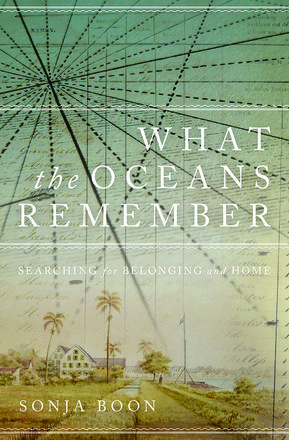
      But in my memoir, What the Oceans Remember: Searching for Belonging and Home, it’s in my heritage, too.

      Music is what first connected me to my ancestors: my musical passions seemed to align with those of my choral director grandfather, a man I barely got a chance to know, but who studied at the same music conservatory as I did, half a century before me. And so, music gave me a way to build a relationship with him across time and space. Music is also one of the things that connects me to my children – my two sons, both of whom have found joy in musical performance (if not in practicing….). 

      But music reaches much further through my family histories.

      Music is the rhythm of the oceans that my ancestors travelled, by choice or by force. It’s the calming rush of waves crashing and retreating along the shore. Music is the sound of voices, the mingling of heritages, languages, traditions. It’s the jangle of bracelets on a wrist, the pull and push of a steam engine, a ship’s horn, the whoosh of a whale spout, birds in flight. Music is the buzzing of insects deep in a rainforest.

      But music is also the sound of silence: it’s the words I’ve never shared with my ancestors, the archival materials that disappeared or never existed at all, the conversations I’ll never be able to recover. In these moments, music resides in suspension, in spaces that only speculation can fill. 

      For a while, the manuscript that became What the Oceans Remember: Searching for Belonging and Home was called “Water Music.” It was an homage to the musical threads that weave through my story, both the overt ones that link me to the generations that came before me, but also the emotional and creative impulses of music making that continue to shape everything about my thinking, writing, and dreaming. 

      What the Oceans Remember is about family, memory, and identity. It’s about politics and history, and about finding ways to live in the present with and through the complexities, challenges, beauty – and also, indeed, horror – of the past. For that kid who picked up a brand-new silver flute way back in 1981, never suspecting where that flute might take her, it’s also – inevitably – about music.


      Sonja Boon is a researcher, writer, teacher, and flutist living in St. John’s. Passionate about stories and storytelling, she is the author of What the Oceans Remember: Searching for Belonging and Home (WLU Press, 2019), a memoir that traverses five continents and spans more than two centuries.

      Sonja’s creative non-fiction essays appear in published collections as well as in Geist, The Ethnic Aisle, and ROOM, among others. In addition to her literary work, Sonja has published three scholarly books and numerous articles and book chapters on a range of topics, from eighteenth-century medical life writing to breastfeeding selfies, and craftivism. For six years, Sonja was principal flutist and a frequent soloist with the Portland Baroque Orchestra (Oregon).

      Visit Sonja’s website. Follow her on Twitter.

      Posted in Guest Authors, Recommended Books | Tagged canadian authors, canadian book clubs, memoir, Sonja Boon, The Authors' Book Club, What the oceans remember
    • Writing THE DEVOTED: the Research and Discipline of Stepping into My Novel

      Posted at 9:45 am by TheAuthorsBookClub
      Feb 18th

      Guest post by Blair Hurley

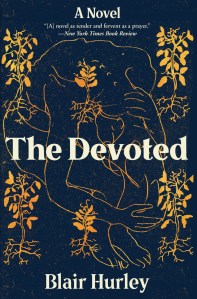
      I wrote my first novel, The Devoted, while still living in my hometown of Boston, fresh out of a grad writing program and keen to tell a story that I felt passionate about. It took four or five years of struggling with scenes and characters and memories from my own childhood, but it didn’t really come together as a story until I realized that I had to step into risky, unknown territory, both from my own realm of experience and also beyond it.

      The Devoted is inspired by both my Irish Catholic roots and my lifelong interest and research into Buddhism in America, particularly the experience of women exploring Buddhist practice. The novel is about a Boston Irish Catholic woman who, disillusioned by the sexual abuse scandals of the church that broke in the early 2000s, converts to Zen Buddhism. After heartbreak and betrayal, she becomes trapped in a manipulative sexual relationship with her Zen Master. The book raises the question of how the #metoo movement can play out in spiritual spaces, where powerful, respected teachers have abused their authority with vulnerable students seeking a spiritual experience. It also explores the healing and redemptive power that faith, both Catholic and Zen, can bring to our lives.

      To write the novel, I had to immerse myself in research about both Catholicism and Zen, reading religious texts, but also Zen poetry, koans, and folktales from Buddhist cultures. I read the fascinating memoirs of medieval Buddhist nuns and was surprised to discover their honest, forthright discussions of the discrimination they encountered. In one Tibetan nun’s account, she sings mournfully of how her Master refuses to believe she can achieve the same level of spiritual accomplishment as the monks that surround her; she defiantly declares she will prove him wrong.

      Many of my readers assume that I’m more familiar with the Catholic portions of the story, but even though my family has Irish Catholic history, I was raised without any particular religious affiliation, free to explore and visit religious spaces without any sort of official allegiance. To write my character’s strict Catholic upbringing, I had to dive deep into Catholic stories, songs, and doctrine, questioning my family about their own memories and jokes and superstitions. When writing scenes set both in Catholic churches and Buddhist Zendos, I felt as much of an outsider as my character, stepping tentatively inside the temple for the first time. What if I got some crucial points of doctrine or ritual wrong? What if I inadvertently disrespected someone else’s sacred space? For the early drafts of my writing, I hovered nervously on the edges of writing these scenes, afraid to offend or to misrepresent, afraid that I didn’t have what it took to write the scene authentically. Writers often struggle with this question of authenticity — do I dare tell this story? Is it my story to tell? Can I do this story justice?

      For me, the line came when I realized I had written cautiously around the edges of the real issues I wanted to address. To really show my character’s experience on the page — with her family, with her Zen Master, singing in church and running away from it, fighting with her brother and falling in love and betraying people all on her messy quest for personal grace — I had to walk into those rooms with her. I had to do my homework, get the research right, walk into those spaces myself whenever I could, and in my imagination when I couldn’t. I visited Zen and Tibetan temples, and wandered in and out of Catholic churches; I read and listened; and at some point, when I had done the work, I had to sit down at my desk, take a deep breath, and begin.


      Blair Hurley is the author of The Devoted published by W.W. Norton and Penguin Random House Canada. The novel was longlisted for The Center for Fiction’s First Novel Prize. Her work is published or forthcoming in Electric Literature, The Georgia Review, Ninth Letter, Guernica, Paris Review Daily, West Branch, and elsewhere. She received a 2018 Pushcart Prize and scholarships from Bread Loaf, Hawthornden Castle, and the Ontario Arts Council.

      Visit Blair’s website. Follow her on Twitter, Instagram, and Facebook.

      Posted in Guest Authors, Recommended Books | Tagged Blair Hurley, book clubs, fiction, The Authors' Book Club, The Devoted
    • Book clubs, choose a book …

      Posted at 3:47 pm by TheAuthorsBookClub
      Feb 6th

      Use the Search Button (top right) to look up a book title, an author, location (e.g., Vancouver), or key words (e.g., thriller) or visit our Invite An Author page.

      Visit our Invite An Author page to learn more about our amazing authors!

      Posted in Recommended Books | Tagged ann y.k. choi, book clubs, canadian authors, Canadian publishing, canadian writers, CanLit, david albertyn, fiction, Fiona Ross, Indigenous authors, memoirs, Recommended Books, short stories, The Authors' Book Club
    • Authors Across Canada

      Posted at 1:51 pm by TheAuthorsBookClub
      Feb 1st

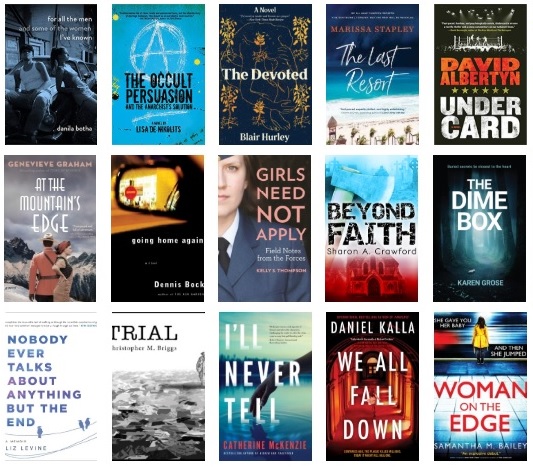
      Click on the authors’ names to learn more about them.

      1 Vanessa
      Farnsworth
      (Creston)
      2 Daniel
      Kalla

      (Vancouver)
      3 Liz
      Levine
      * (Vancouver)
      4 Lauren
      Carter
      (Winnipeg)
      5 Jenny
      Heijun Wills
      (Winnipeg)
      6 David
      Albertyn
      (Toronto)
      7 Samantha
      M. Bailey
      (Toronto)
      8 Becky
      Blake
      (Toronto)
      9 Dennis
      Bock

      (Toronto)
      10 Danila Botha (Toronto)
      11 Chris
      M. Briggs
      (Toronto)
      12 Hannah
      Brown
      (Toronto)
      13 Ann Y.K. Choi
      (Toronto)
      14 Sharon A. Crawford (Toronto)15 Farzana Doctor (Toronto)
      16 Karen
      Grose
      (Toronto)
      17 Nate Hendley
      (Toronto)
      18 K.J.
      Howe

      (Toronto)
      19 Blair
      Hurley

      (Oakville)
      20 Uzma
      Jalaluddin

      (Markham)
      21 Kasia
      Jaronczyk

      (Guelph)
      22 Tehmina
      Khan

      (Toronto)
      23 Derek
      Mascarenhas

      (Toronto)
      24 Hannah
      M. McKinnon

      (Oakville)
      25 Maria
      C. McLean

      (Toronto)
      26 Maria
      Meindl

      (Toronto
      27 Kim
      Moritsugu

      (Toronto)
      28 Lisa de
      Nikolits

      (Toronto)
      29 C.S.
      O’Cinneide

      (Guelph)
      30 Dorothy
      Ellen Palmer

      (Burlington)
      31 Laurie
      Petrou

      (Grimsby)
      32 Waub-geshig
      Rice
      **
      33 Marissa Stapley
      (Toronto)
      34 Jesse
      Thistle

      (Toronto)
      35 Kelly S.
      Thompson

      (North Bay)
      36 Ann
      Walmsley

      (Toronto)
      37 Vanessa
      Westermann

      (Havelock)
      38 Catherine McKenzie
      (Montreal)
      39 Genevieve Graham
      (Halifax)
      40 Sonja Boon
      (St. John’s)
      *Liz splits her time between Vancouver and Toronto **Waub splits his time between Sudbury and Wasauksing

      Posted in General | Tagged book clubs, canadian authors, Canadian books, CanLit, Indigenous authors, The Authors' Book Club
    ← Older posts
    Newer posts →
    • For a list of Blog Posts, see the tab ‘NEWS, EVENTS, ETC.’

      • Thank you from the Authors Book Club
      • An Interview With Laura Pratt
      • The Quotable Dennis Bock
      • Plots & Pandemic: Virtual Meet & Greet with Lee Gowan
      • Catching up with David Albertyn
    • Watch our Author interviews, events and more!
    • Follow us on Twitter
  • Enter your email address to follow this blog and receive notifications of new posts by email.

  • Blog Posts by Month

    • April 2024
    • June 2023
    • July 2022
    • April 2022
    • January 2022
    • August 2021
    • July 2021
    • June 2021
    • May 2021
    • February 2021
    • November 2020
    • October 2020
    • September 2020
    • August 2020
    • July 2020
    • June 2020
    • May 2020
    • April 2020
    • March 2020
    • February 2020
    • January 2020
  • Need this text translated?

Blog at WordPress.com.

  • Subscribe Subscribed
    • The Authors Book Club
    • Join 96 other subscribers
    • Already have a WordPress.com account? Log in now.
    • The Authors Book Club
    • Subscribe Subscribed
    • Sign up
    • Log in
    • Report this content
    • View site in Reader
    • Manage subscriptions
    • Collapse this bar
 

Loading Comments...