The Authors Book Club

Connecting readers and authors in Canada
  • Announcement
  • About Us
  • Blog Feed
  • Invite An Author
  • Resources
  • FAQ
  • News, Events, etc.
  • Fiona Reads
  • Writers In Trees
  • Contact
  • Category: Guest Authors

    • The Spotlight Series: Pillow by Andrew Battershill

      Posted at 11:00 am by TheAuthorsBookClub
      May 13th

      Featuring Coach House Books

      Pillow, the titular character in Andrew Battershill’s Pillow, loves exotic animals, which is why he chooses the zoo for the drug runs he does as a low-level enforcer for a crime syndicate run by André Breton. He doesn’t love his life of crime, but he isn’t cut out for much else, what with all the punches to the head he took as a professional boxer. And now that he’s accidentally but sort of happily knocked up his neighbor, he wants to get out and go straight.

      But first there’s the matter of some stolen coins, possibly in the possession of George Bataille, which leads Pillow on a bizarre caper that involves kidnapping a morphine-addled Antonin Artaud, some corrupt cops, a heavy dose of Surrealism, and a quest to see some giraffes.

      Dive into Pillow by reading the excerpt below followed by Andrew’s comments on the passage.

      *

      The crime syndicate Pillow had swiftly and easily and sadly flowed into after his neurologist had told-not-asked him to retire made a lot of noise and very little money, and was skewed heavily to the crime end of organized crime, rather than the organized side.

      The head of the syndicate was a mid-sized player named André Breton. He and his boys bought and sold drugs, made book, loan-sharked and had started two riots for fun. Breton’s syndicate were mostly recruited from his days as a Marxist firebomber in Paris. They’d done low-level hack terrorist stuff until they caught too much attention and bolted the country for a spot in the superstructure and the cash to pay for pretty paintings. Breton was supposed to be a tastemaker: rich people called him in to tell them what art to buy. He used it as a way to launder money and move bribes.

      Most of the time, the Breton crew hung out and got high, talked about their dreams and played parlour games until Breton gave them something to do. And tonight what Breton had given Pillow and Louise Aragon to do was guard-dog a deal to buy some stolen coins.

      As often happened, Pillow ended up having to wait around outside his apartment, kicking the toe of one shoe with the heel of the other, as he waited for his ride to some place they hadn’t bothered to tell him in advance.

      Most of what Pillow did was watch people exchange money. He’d make collections and stand behind Breton at deals, watching the cash and making sure nobody got out of line. It wasn’t usually to muscle anybody. He was supposed to be a former boxer, violence just an impression he made. The heavy wet work was handled by Breton’s two favourites, Don Costes and Louise Aragon.

      Pillow was in a very minor, but reasonably comfortable, spot in the organization. He knew what he was to them and what he wasn’t: he wasn’t particularly useful but he had uses; he wasn’t exactly trusted but he was liked; he wasn’t going to make much money but he wasn’t going to cost them much either. Plus, he had used to be a celebrity, which is always worth a very sad and very tiny bit.

      After what felt like a long time, Louise Aragon pulled up in a car so old and so black and so heavy it might actually have been a Model T. She screeched to a stop and kicked the huge, steel passenger-side door open. Pillow swung himself into the car and settled in already slumped.

      ‘How do you do, Pillow?’

      Pillow stayed still, suggesting a shrug with just the way he breathed. ‘You have really flexible legs.’

      ‘Thank you, sir. I’ve never stretched a thing. Sometimes one is just a marvel.’

      Pillow nodded evenly, then turned to look at the dark sky framed by black metal through plate glass. He felt the car moving under him, in the way that you can feel things that move faster than your legs carry you and it just feels like sitting down.

      Louise was one of Breton’s go-to people. She was thirty-some- thing and half-sad in that way fun people without a whole lot of luck get. She was the kind of friend Pillow had, which is to say a very friendly acquaintance.

      ‘Do you want to know where we’re going, Pillow?’

      ‘I’m more curious about those legs – you don’t stretch ’em even a little?’ Pillow feinted like he was going to tickle her leg, reached up and snapped her bra strap when she brought her hand down to defend the leg.

      Louise laughed. ‘Bark like the dog you is, Pillow, bark like the dog you is.’

      ‘Does introducing you to your wife buy me any leeway, Louise, huh? I think it gets me a little and I take space where I find it. Space is everywhere, and we need every little, tiny inch of it.’

      Louise flapped her hand like it was a talking human mouth, or possibly a very stupid and hungry bird mouth, then she put both hands back on the wheel and refocused on her incredibly erratic driving.

      Pillow rolled his shoulders back and took to stretching them. His shirt lifted up, and Louise poked his bellybutton. She had her bangs pulled back tight. Her haircut looked like a wave that had been ironed.

      ‘So, just to get it out of the way,’ she said, ‘we’re going to Mad Love. And as always, I am deeply sorry.’

      Mad Love was the bar where a good deal of the money and brain cells Pillow had held on to after fighting had gone to die. It was one of the dingiest places he’d ever seen or smelled or touched. The place, like a lot of things, gave him a headache that would make other people’s headaches jealous.

      ‘Well, that’s a bummer. I guess you should maybe tell me what I’ll be doing there.’

      ‘What you always do, my man: look tall and try not to fall asleep.’ ‘I don’t look tall, I am tall, and I don’t make any promises about sleeping.’

      Louise screeched the car to a stop in an alley that looked like every other alley. ‘Can you at least promise to dream well then?’

      Pillow pulled one long strand of hair loose from her head and let it flop unevenly down the middle of her face. ‘For you, I’ll try.’

      Louise looked at Pillow for an extra second and smiled at him in the way you’d smile at a picture of a really cool building that’s already been torn down.

      *

      My default answer to the question, “What do you hope readers take from this book/passage?” is whatever they want! I’ve always thought that once your book-children go out in the world, they’re full-grown adults. Part of the fun of reading is the freedom to interpret books however you want to, and part of the fun of writing them is seeing what people take away from it. 

      So, sure, my default answer is cop out (a sincere cop out), but in this case I have another one. What I hope people take away from this book, and this passage of the book particularly, is Pillow the character. While this is a novel about a plot to steal a valuable coin from a group of Surrealist poets in a crime gang, what this book is really about is Pillow, a broken down boxing champion looking to find love and take as many trips as he can to the zoo. 

      Fun fact, I initially wanted to call this book You feel me?, and was promptly informed that this is an aggressively terrible name for a book. Pillow, the title, emerged after all the major edits had been done on the manuscript, and, after a long time of having no idea what to call this book, we settled on the final title weirdly quickly, and it just felt right. The longer I worked on this book the more I realized that Pillow, the character, is the emotional heart of the book.

      Andrew Battershill

      To continue reading, purchase Pillow here! 


      Andrew Battershill is a novelist from British Columbia. He was the  co-founder of Dragnet Magazine and the fiction editor of This Magazine. He was the 2017-2018 Writer-in-Residence at the Regina Public Library, and the 2018 Writer in Residence for the City of Richmond. He lives in Halifax, Nova Scotia.

      Visit Andrew’s website. Follow him on Twitter.

      Posted in Guest Authors, Recommended Books | Tagged Andrew Battershill, canadian authors, CanLit, Coach House Books, Pillow, The Authors' Book Club
    • The Spotlight Series: Y by Aaron Tucker

      Posted at 1:00 pm by TheAuthorsBookClub
      May 12th

      Featuring Coach House Books

      Y, by Aaron Tucker, follows J. Robert Oppenheimer: reluctant father of the atomic bomb, enthusiastic lover of books, devoted husband and philanderer. Engaging with the books he voraciously read, and especially the Bhagavad Gita, his moral compass, this lyrical novel takes us through his story, from his tumultuous youth to his marriage with a radical communist and the two secret, consuming affairs he carried on, all the while bringing us deep inside the mind of the man behind the Manhattan Project.

      Discover Y by reading the excerpt and Aaron’s thoughts on it below.

      *

      They stayed at Perro Caliente for two months, and during that time he and Kitty would ride together under the heat of pride and competition across the hardest New Mexico trails, each admiring the other’s meagre movements of control, a flex of legs rarely aided by spurs in the stirrups, instead a light tap with the side of a palm or tug upwards on the reins, their mutual wonder a recognition of each other’s shared muscle memory. She was there even though she was married to another man; in fact, he knew Kitty’s husband, Richard Harrison, a friend and doctor, and the two men would sometimes share notes and drinks in the restaurants near Berkeley, spaces crowded with noise. Yet he didn’t feel the yank of guilt and instead relished his and Kitty’s overlapping, a low and constant rumble like the engine of his exquisitely curved Chrysler coupe as he drove Kitty around, the speed of the big car accented by his half-attention to driving and her describing how the two of them would soon stride into rooms together, powerful and charming and overwhelming. Although she was married, he would burst into parties pronouncing her his fiancée, and Kitty would emerge, inflorescent, from behind him, bursting out in unthinking laughter, her body unconfined by the distant and overwrought movement Jean showed even in hesitating when turning the kettle on, Kitty bathed in the scent of orchids, the large petals drooping over his thin fingers as he thrust the flowers excitedly towards the hosts. He would overhear her tell her friends, “I simply adore Robert,” and knowing that he was listening, would explain how he would expand when he was in a conversation, become as large as the room in the way that a soft bulb glows and settles over every person and thing. 

      They remained that way all through the summer, winding through the pines and spindly birches that blanketed the mountains, only stopping to build a secluded fire, eat and, sharing a sleeping bag, groan against each other, “Robert,” him above her and her hands clenching and pushing him further into her, “Robert,” the stars just above them, white, large, blossoming. She told him how brilliant he was, how he was going to conquer the future, that she would conquer it with him, barbarians consuming mussels soaked in garlic butter and leeks, duck confit piled beside black currants, drinking the best wines of every city, of every decade, and he saw in her imagery sattvic, Krishna explaining the best of the three kinds of food, 

      Where vigor, life, power, comfort, health
      Content are strengthened, food
      Bland, solid, cordial, savory
      Is relished by the good
      , 

      and she repeated to their guests at Perro Caliente, to an amused Katy after she handed back Kitty’s underwear, left at her ranch home, looking at him with bemusement and caution, and Kitty left that August pregnant with their son, Peter. 

      *

      Although Y looks like a piece of historical fiction on its surface, in my mind, its heart is the love triangle between Robert Oppenheimer, his wife Kitty and his mistress Jean Tatlock that is the affective centre and prime mover of the work. It is through Robert’s relationships with these powerful and engaging women that his own perspectives of the world, and his actions within, come to bear. While Jean and Kitty are not opposites, they do represent two separate and appealing paths for Robert that roughly parallel his feelings about his leadership of the Manhattan Project at Los Alamos and the subsequent use of the atomic bomb: Jean embodies much of the doubt he has about himself and his work, while Kitty is more aligned with his ambitions and sense of patriotic duty. 

      The second chapter, from which this excerpt has been taken, details Robert and Kitty’s blossoming romance. Importantly, the two bond over their mutual love of New Mexico and horseback riding, and their passion for each other is crystallized in the beginning of their bold and unapologetic affair. For me, this passage shows how the two are unbridled and completely enamoured with each other, providing essential nourishment for the other; yet, the relationship is not quite equally symbiotic, even from the beginning. Kitty has to fold parts of herself into Robert’s ego and drive, become his wife and put aside her own dreams, and, despite her immense love for him, there is a well of tragedy there. She empowers Robert, but Robert drains a key energy from her. 

      As well, the passage reflects a further contradiction and tension within Robert: his respect and care for the New Mexico landscape that he also destroys by leading the Manhattan Project. The incorporation of the poetry here reflects Robert’s interior struggles and his constant turning to the texts of his life for ethical and spiritual guidance. 

      Aaron Tucker

      To continue reading, purchase Y here! 


      Aaron is the author of two collections of poetry, irresponsible mediums: the chesspoems of Marcel Duchamp and punchlines, as well as the two scholarly manuscripts Virtual Weaponry: The Militarized Internet in Popular Cinema and Interfacing with the Internet in Popular Cinema. His current collaborative project, Loss Sets, translates poems into sculptures which are then 3D printed; he is also the co-creator of The Chessbard, an app that transforms chess games into poems. In addition, he is a lecturer in the English department at Ryerson University.

      Visit Aaron’s website. Connect on Instagram and Facebook.

      Posted in Guest Authors, Recommended Books | Tagged Aaron Tucker, Canadian author, Canadian writer, CanLit, Coach House Books, The Authors' Book Club, Y
    • The Spotlight Series: Queen Solomon by Tamara Faith Berger

      Posted at 1:00 pm by TheAuthorsBookClub
      May 11th

      Featuring Coach House Books

      Queen Solomon, by Tamara Faith Berger, chronicles the erotic awakening and mental disintegration of an intense young man who meets Barbra, an Ethiopian Jew, when she is brought into his home by his father for the summer. Terrified of Barbra and drawn to her in equal measure, our narrator finds himself immersed in compulsive psychosexual games with her, as she binge-drinks and lies to his family. Seven years later, as our narrator is getting his life back on track, with a new girlfriend and a master’s degree in Holocaust Studies underway, Barbra shows up at our narrator’s house once again, her “spiritual teacher” in tow, and our narrator finds his politics, and his sanity, back in question.

      Get a taste of Queen Solomon in the following excerpt, and read Tamara’s thoughts below.

      *

      Ariane worked with me during sex to change my ‘bad thinking.’ She actually called it ‘traumatized thinking’ – a need to smother all my bad thoughts with sex. Ariane said I had textbook sex addiction, that my shame from Barbra and the failed way it ended meant, in fact, that I hated myself.

      For two years, okay, this is what me and Ariane talked about. I mean, this is what we worked on during sex. I didn’t tell Ariane that it was not always therapeutic. In fact, some- times it even made me feel worse. Like, Ariane would tell me in sex to go slower and why, and then harder and why, how to lick her, how to suck her and why and why. I secretly did not always subscribe to her method, even though I did like that we had a lot of sex.

      What Ariane fixated mostly on about my relationship with Barbra was that she thought that I thought that Barbra wanted to be submissive because Barbra explicitly told me to hurt her.

      ‘I was mistaken about that,’ Ariane deduced. ‘Barbra was obviously not a submissive.’ Ariane said that what we did was s/m 101. She said what Barbra did is called ‘topping from the bottom.’

      Uh, does ‘topping from the bottom’ mean you make up all the rules? I wanted to ask her. Does ‘topping from the bottom’ mean that the knife is always truly yours?

      I did not tell Ariane about our specific scripts. I did not tell Ariane about what truly happened at the ending. I told her my scar was from surgery when I was fourteen after I broke my collarbone. I told her, in general, that Barbra asked me to do something and I did it. I told her that we didn’t really have to say yes or no. It was a system, I explained, of complicit synchronicity. Ariane scoffed. She continually tried to school me. In sex, she said, the woman must lead.

      ‘This is ancient knowledge. Stuff the Tantrics believed.’

      Did the Tantrics believe that a turned-on and traumatized woman could be actually violent? Tantric is outdated, I thought. What did they know about consent?

      Ariane assured me that my true self was not chauvinistic.

      She said that all real men worshipped cunt.

      Ariane said, ‘If you love cunt, you actually have to know how to treat it. If you love cunt, you have to know your way around its complex abyss.’

      Sometimes I thought Ariane only liked me because I made her feel worshipped. I loved Ariane’s body. She was long- armed, big-nippled, bluish-skinned. When we had sex, I usually licked her pussy for an hour. Between Barbra and Ariane, I’d practised cunt-licking. Girls always said that they loved my way of licking. I always signed my name on their thighs. I licked them and tricked them, massaged them and slapped them. Pussy foam, pussy oil. I liked period pains. I got off being smothered. I liked to see girls get really wild. Licked-open cunts liked to get really wild.

      I told the cunt to sit on my face.

      I said to the cunt, please hump my whole head.I loved cunts lodged with matter. I loved a maw full of cunt on my pillowcase.

      *

      I would like readers to get a rise out of this section, to get a little dizzy between the head and the crotch. At first, the terms are flipped around victimhood, setting up a guy who has been sexually traumatized while Ariane, his girlfriend, is the dominant sexual presence. As this section progresses, the reader learns that the narrator had an S/M relationship with Barbra years ago where he was clearly in over his head. He is thus stuck between two dominant female lovers, while he remains linguistically in charge. I actually wrote this section as an ode to cunnilingus, and that’s how I would love to have it stand, yet I’m also aware that there’s some pretense in my narrator’s braggadocio.  

      What I’d like readers to take away from this section is that sex gives us knowledge. Ariane says that if you love cunt, you have to know your way around its “complex abyss.” While Barbra, the hidden character in this fragment, seems to have taught the narrator everything he knows: how to ‘top from the bottom,’ how to play mind games in sex. Mind games go with cunnilingus. 

      I hope that readers can overcome any aversion to a male narrator synthesizing his lovers with the word cunt. I love the power of this word. I think it consistently grows in erotic and syntactical meaning. Cunt is hot and “lodged with matter,” as my narrator understands.  

      Tamara Faith Berger

      Purchase a copy of Queen Solomon here! 


      Tamara writes fiction, non-fiction and screenplays. She is the author of Lie With Me (2001), The Way of the Whore (2004), (republished together by Coach House Books as Little Cat in 2013), Maidenhead (2012) and Kuntalini (2016). Her fifth book, Queen Solomon, was published by Coach House Books in October 2018. Maidenhead was nominated for a Trillium Book Award and it won the Believer Book Award. Her work has been published in Apology, Canadian Art, Taddle Creek and Canadian Notes and Queries. She has a BFA in Studio Art from Concordia University and an MFA in Creative Writing from the University of British Columbia.

      Visit Tamara’s website. Follow her on Twitter.

      Posted in Guest Authors, Recommended Books | Tagged Canadian author, Canadian books, CanLit, Coach House Books, Queen Solomon, Tamara Faith Berger, The Authors' Book Club
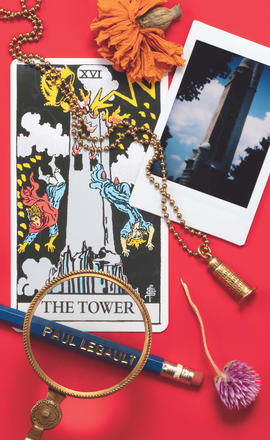
    • The Spotlight Series: THE TOWER by Paul Legault

      Posted at 2:00 pm by TheAuthorsBookClub
      May 7th

      Featuring Coach House Books

      To kick off National Poetry month in April, we turned to Paul Legault to share an excerpt and a reflection on a poem from his new collection, The Tower, for our Weekend Poetry series. Read on below for what he had to share!

      “A Prayer for My Dog” is based on a W. B. Yeats poem titled “A Prayer for My Son”. Basically, the mystical Irish senator prays for a guardian angel to watch over his crying baby (so he can get some sleep). I don’t have a son, but in the great queer literary tradition (see: Gertrude Stein’s Basket) I have a dog.

      Joseph and I got a puppy when we moved in together in Bushwick, right after Enlightened was cancelled, so we named her Laura Dern. What else do you need to know about this poem? In The Walking Dead, my favorite actor on the show, Danai Gurira, plays a katana-wielding badass. What else? There’s this beautiful W. S. Merwin poem called “Place” that starts “On the last day of the world / I would want to plant a tree.” 

      Love makes you think about the apocalypse, because it gives you this mission: protection, which is to say the protection of your loved ones against the worst thing that can happen. I wish there were guardians to protect everyone on the Earth. We’re in the midst of a pandemic. There is a climate crisis that threatens to kill millions more. Trees and we are in a bad position. It is easy to love animals. They just are. Us too.

      Paul Legault

      Get your copy of The Tower here! 


      Paul Legault is the author of The Madeleine Poems (Omnidawn, 2010), The Other Poems (Fence, 2011), The Emily Dickinson Reader: An English-to-English Translation of the Complete Poems of Emily Dickinson (McSweeney’s, 2012), Self-Portrait in a Convex Mirror 2 (Fence, 2016), and Lunch Poems 2 (Spork, 2018). He also co-edited The Sonnets: Translating and Rewriting Shakespeare (Nightboat, 2012).

      Visit Paul’s website. Connect with him on Twitter and Instagram.

      Posted in Guest Authors, Recommended Books | Tagged Coach House Books, Paul Legault, poetry, The Authors' Book Club
    • The Spotlight Series: POP by Simina Banu

      Posted at 1:50 pm by TheAuthorsBookClub
      May 6th

      Featuring Coach House Books

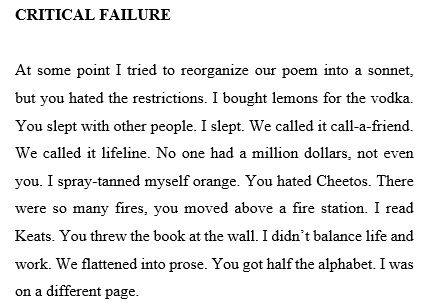
      POP, by Simina Banu, delineates the intensities of a volatile relationship through a variety of lenses. The book invites the reader to journey both forward and backward in time, to retrace steps, solve word searches, and hold pages to the light. 

      Read on for a taste of POP and Simina’s thoughts on the poem ‘Critical Failure.’

      POP began as a hodgepodge of short, fragmented pieces trying to capture moments of shifting emotions. In a sense, they were all failures. I attempted a variety of poetic forms searching for a structure that fit the feeling, but nothing quite got there. With time I realized that part of what was interesting was the failure itself—the varied, increasingly desperate attempts. Emotions could not be contained in the structure of a poetic form just as the relationship which had sparked them could not be contained and structured. It was this realization that led to the premise of the section titled ‘on separating from our poem.’

      I’ve always been interested in the various rules and regulations of poetry: the sonnet, with its alternating moments of stress and unstress; the haiku, at once huge and tiny; the epic, with its mythical narrative arcs. I enjoy the way structure collaborates with the words themselves to create multiple layers of meaning. My favourite development, however, is when the poem breaks free. I am reminded of Phyllis Webb’s brilliant ‘Poetics Against the Angel of Death,’ where the speaker navigates—and escapes—all structural constraints to achieve a kind of liberty that is only emphasized by its formal demolition. I aimed toward a similar liberating energy in my work, to take a wrecking ball to past attempts at confinement and rebuild anew.

      Simina Banu

      Purchase your very own copy of POP here! 


      Simina Banu is a writer interested in interrogating her own experience with technology, consumerism, pop culture and the poetics of (un)translation. Her poetry has appeared in numerous journals, including filling Station, untethered, In/Words Magazine and the Feathertale Review. In 2015, words(on)pages press published her first chapbook, where art. Her second chapbook, Tomorrow, adagio, will be released in 2019 through above/ground press. POP is her first full length collection of poetry. She lives and writes in Montreal.

      Connect with Simina Banu on Twitter and Instagram.

      Posted in Guest Authors, Recommended Books | Tagged canadian authors, Canadian poets, CanLit, Coach House Books, Critical Failure, New Releases, poems, poetry, Simina Banu, The Authors' Book Club
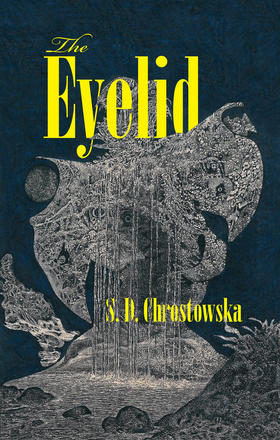
    • The Spotlight Series: The Eyelid by S.D. Chrostowska

      Posted at 1:00 pm by TheAuthorsBookClub
      May 5th

      Featuring Coach House Books

      In slippery, exhilarating, and erudite prose, The Eyelid revels in the camaraderie of free thinking that can only happen on the lam, aiming to rescue a species that can no longer dream.

      We couldn’t wait to ask S.D. Chrostowska a few questions about her new dystopian novel.

      Q. What drew you to write this story?

      A. Resistance to the warped values dominant in our society: the need to cut down on sleep to get ahead and stay ahead, the wish to be “on” 24/7, without downtime if possible, so as not to miss out. Also, the realization that, in a mere matter of decades, our relationship to the material world has fundamentally changed. Humanity pictures itself no longer the rational master of nature, but its nightmare. Humankind is a bad dream. And finally, it was the state of emergency in France and the “political warming” of Western societies. The verities of yesterday no longer comfort and the new conflicts don’t map onto classical ideologies. Many of us are groping in the dark. A fading horizon and social instability favour dreaming dangerously. I’ve come to the conclusion that dreamers, most of whom are neither closet revolutionaries nor terrorists, are our only hope.

      Q. How is ‘daydreaming directly subversive’?

      A. In daydreams, we often claim what reality denies us. We are happier, loved, rich, and famous. No matter how much we can buy to make ourselves happy, our need for happiness, expressed in daydreaming, is not satisfied. The imagination is basically creative. Felicity and optimism have become obligations because we are given the tools to fulfill them: consumer goods, media, pills. Our reveries are to some extent captive to this well-oiled system of gratification and self-fulfillment. They thrive on it. But they also subvert this order by their transgressive nature, their lawlessness, taking what in reality is not ours. Daydreams are not completely bound by the rules of existing society. They slip through its cracks. And if they are not, then they are the imagination’s placeholders for emancipation, mental spaces when we alter reality and can rehearse the good life, the promise of which the market has largely betrayed. The dreaming that interests me is social: dreaming of a better world for all, not just oneself. Social reverie is the imaginative “imperience” of collective freedom to the real experience of oppression.

      Q. What would a state have to gain from eliminating sleep?

      A. Lack of sleep dulls our mind, not just our reflexes. As we let down our guard, we become more available to production and consumption, and politically more docile. Work that is repetitive, mechanical is not too affected. Our choices as consumers are increasingly made for us by the internet anyway. Deprived of sleep, we not only become irritable, we also lose our ability to think and act rationally and critically. More complex mental operations suffer. Coffee and other stimulants might save the day for a while. Without them to compensate for sleep loss, waking life quickly becomes a confusing mess barely held together by routine and habits. Going through the motions, we resemble the autopilot machines we imagine taking over menial work for us so as to liberate our attention for being better consumers, well informed, more up to date, and trendier. The market and thus the state, which is not ideologically neutral, gain by having most brains run at less than their peak capacity while keeping us maximally occupied.

      Until the economy makes inroads into our dreams, sleep remains a restorative withdrawal from the ceaseless solicitation which, for better or for worse, is an integral part of a global economic order that at the end of the day benefits very few. Asleep and dreaming, the affluent and the destitute might resemble each other. Their sleepless nights, however, could hardly be more different. A gulf separates the everyday worries keeping them awake at night. If sleep unites us, insomnia divides us.

      In dream states we are free and suffer no lasting consequences. Human consciousness itself appears to be a kind of dream, an emergent property of the nervous system. Only let’s not fetishize dreams if it means closing our eyes to the miseries of reality. Dreaming is not a solipsistic refuge. But we must sleep on the problems with society before we can find solutions to them. And, to fix things, we need to be awake.

      To read more of The Eyelid, get your copy here!


      S.D. Chrostowska is Professor of Humanities and Social & Political Thought at York University, Toronto. She is the author of Literature on Trial: The Emergence of Critical Discourse in Germany, Poland, and Russia, 1700–1800 (2012); Permission: A Novel (2013); and Matches: A Light Book (2015, 2nd enlarged ed. 2019), and co-editor of Political Uses of Utopia: New Marxist, Anarchist, and Radical Democratic Perspectives (2017). Learn more about S.D. Chrostowska.

      Posted in Guest Authors, Recommended Books | Tagged Coach House Books, S.D. Chrostowska, The Authors' Book Club, The Eyelid
    • Releasing a book in the time of COVID-19

      Posted at 1:31 pm by TheAuthorsBookClub
      Apr 16th

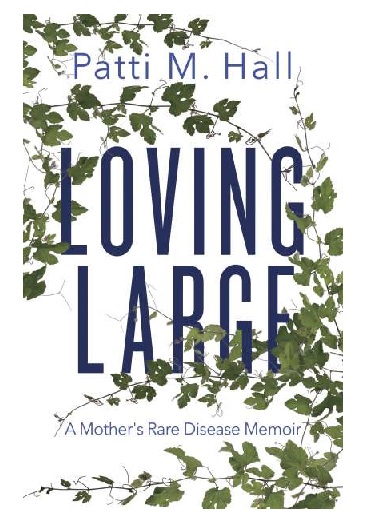
      Guest post by Patti M Hall

      It’s a difficult time to be launching a book into the world. 

      I’d been thinking this and worse to myself in these weeks leading up to my memoir’s publication date, April 25th. And, it wasn’t just me thinking it. You were thinking it too. (You were likely even saying how glad you were that you weren’t releasing a book right now.) We’ve all been cringing as much-anticipated books with their accessory publicity machines, released and then had multi-city book tours cancelled. We watched, peeking between our fingers as these authors then took to social media and vulnerably talked to readers about how rotten the situation was. We grieved as our favourite local bookseller closed the doors, and then celebrated wildly when they decided to fill orders online. 

      Writers, with and without the platform we are all told we need, and even many lacking the necessary extroversion gene, are funneling their energy into creative ways to help books find their readers. 

      My release date slipped under the wire when cut offs for printing were being chosen. Because my book was printed, warehoused, and in some cases shipped to bookstores, mine will be dropping a few days from now. 

      I don’t have strong feelings about it though. COVID-19 is tempering our reactions to disappointment. I’m not asking myself who is going to have an easier time getting their book into the world, me or my friend whose publication date is now pushed into 2021. In the time of COVID, there is no comparison. No one is doing better than anyone else right now. We are united in our fear, amazement, and cautious optimism.

      Acceptance when confronted with medical challenges isn’t part of me. Looking for situational advantages when it comes to medical matters is something my readers will see me grow skilled at in my memoir. My son was diagnosed with an uber-rare disease, but we eventually found treatment, and although it took years to see much measurable success, it did come. Through it all, we always had the capacity to know that it could be worse for us. We knew what other families were facing. Medical crisis consumes all the compassion you have for your ill loved one, but it also permanently produces a reservoir of empathy that fills the gaps within you like water fills the spaces between river rocks. 

      When a diagnosis changed my son’s life trajectory, the impact was like the tectonic plates had shifted and our Before was out of jumping distance from the After where we found ourselves. I believe that COVID-19’s time will be a continental divide in how we do everything. I’m talking about more than books here. I believe our uninhibited proclivity for gatherings, unabashed willingness to cram into an airplane with a hundred or more other people (where the filtration system runs on a continuous loop, and we sit thigh to thigh, our faces about a foot away from one another), will be changed forever. And we’ll do it differently somehow. We will pivot into new behaviours and new boundaries in the After.  

      I’m excited to see what the publishing industry is going to do differently. Innovation in book marketing is only the beginning. I’m honoured to be among the authors that will have a virtual book launch, film a selfie interview to discuss the book’s themes on my social media pages, and record myself reading excerpts to send as an e-mail thank you to people who buy my book online. 

      I’m hearing from people that they don’t think writers are too affected by the COVID shelter-in-place restrictions. We stay home all the time working anyway, and by choice, they say. The mental montage of the writer as loft-dwelling loner, and unbathed squinty-eyed recluse, still prevails in people’s minds. I think we will be correcting a lot of stories about the nature of writing, promotion, and publishing in the coming months. We might even convince our judgy neighbours that we actually do get out of our sweatpants sometimes!


      Patti M. Hall is a non-fiction writer and writing coach. She lives with her two sons in Bradford, Ontario.

      Visit Patti’s website. Follower her on Twitter, Facebook, and Instagram.

      Posted in Guest Authors, Recommended Books | Tagged Canadian author, creative nonfiction, Loving Large, memoir, nonfiction, Patti M Hall
    • So, you want to start a Virtual Book Club?

      Posted at 2:09 pm by TheAuthorsBookClub
      Mar 28th

      Guest post by Hannah Mary McKinnon

      As an author, I’ve had the pleasure of being invited as a guest to a number of book clubs, in person and online. Each time has been an absolute pleasure, and what struck me the most was the camaraderie amongst the members, so much so that I decided to start my own book club earlier this year. 

      Enter the COVID-19 pandemic and social distancing measures, which means in-person book club meetings must be postponed, and it might seem crazy to even think of starting a new club. Except we need human connections and something to look forward to more than ever right now, and a virtual book club could add to the comfort we so desperately need. The solution? A virtual book club. Here are some tips to get you started:

      1. Find members

      You can’t have a book club without members but where to find them? I posted in a local Facebook mom’s group and was immediately inundated with replies. Expecting a handful of participants, I couldn’t believe it when over 60 women indicated their interest. That number settled at 17 members after people couldn’t make it because of family and/or scheduling conflicts. 17 is quite a large number for a virtual book club, and I’d suggest having around 10 members so it’s easier to chat with one another online.

      1. Have an introductory meeting online

      Make it a “meet-and-greet” where you introduce yourselves, chat about the genre of books you enjoy (or don’t care for), and talk about the structure of the group. To do this, use a videoconferencing tool such as Zoom. A “pro” subscription for up to 100 participants per meeting costs $20/month, but maybe one of your members has already signed up, and they can set the meetings up and share the link with the members. Participants can mute their mic when not talking to minimize background noise.

      1. Figure out how to pick books

      In my book club, we decided to have five rotating selections: Book Club Picks, Suspense/Thriller, Women’s Fiction, Historical Fiction and “Wild Card” where anything goes. We plan the books two months ahead, members make suggestions on which we vote afterwards, so people have the chance to look up the books first. Having themes means we read a variety of genres, and don’t have the same one multiple months in a row. Alternatively you could have the host pick the book for the next (online) gathering, or go in alphabetical order instead. Maybe you pluck books out of a (virtual) hat. There are many different ways that allow each member to give input.

      1. Create a Facebook Group

      While I initially managed all communication via email, it was much easier to shift everything to a Facebook group. The group is hidden, meaning only members have access, and I scheduled all our events for the rest of the year. The group is also an easy place to share information about upcoming reads, where to find books, and to create the monthly book pick polls on which members can vote. information about upcoming reads, where to find books, and to create the monthly book pick polls on which members can vote.

      1. Invite authors

      Admittedly, this is easier to do when you’re an author yourself and you’ve made connections with other writers, but you might be surprised by how many authors love to be a guest at a book club. The wonders of technology mean you can beam them straight into your chosen location, again by using Zoom. Whether they charge for their time depends on the author, but regardless, sharing photos and reviews of their novels on social media will no doubt be greatly appreciated. Still unsure about inviting an author?  The Authors’ Book Club provides a list of Canadian writers who are happy to join your meeting—all you need to do is ask.

      Creating a book club has been a wonderful experience and an excellent way to find like-minded friends with whom I can share my love of books. We’re living through an unprecedented crisis, and many of us in isolation, feeling disconnected from the world. A virtual book club might be another way for you to make new online connections, and have a ready-made new set of friends you can meet IRL once the pandemic is over.


      Hannah Mary McKinnon was born in the U.K., grew up in Switzerland and moved to Canada in 2010. After a successful career in recruitment, she quit the corporate world in favor of writing. Sister Dear is Hannah Mary’s fourth novel. She lives in Oakville, ON, with her husband and three sons.

      Visit Hannah Mary’s website. Follow her on Twitter, Instagram, and Facebook.

      Posted in book clubs, Guest Authors | Tagged ann y.k. choi, authors, book clubs, books, canadian authors, canadian book clubs, canadian writers, david albertyn, Fiona Ross, Hannah Mary McKinnon, online book clubs, starting a book club, The Authors' Book Club, virtual book clubs
    • What makes a cozy mystery a great choice for a book club?

      Posted at 9:33 am by TheAuthorsBookClub
      Mar 10th

      Guest post by Lynn McPherson

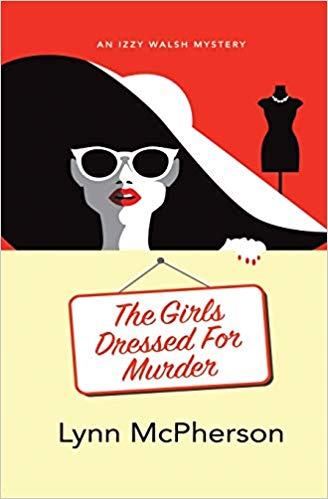
      The Girls Dressed for Murder is a light-hearted, character-driven whodunit set along the New England coastline in the 1950’s. It is the third book in the Izzy Walsh Mystery Series and belongs to a sub-genre of crime fiction called Cozy Mystery. You may want to know the characteristics that define a cozy before choosing one for your book club. Let’s take a look.

      First of all, the violence is done primarily off-stage. There are no gory details in any part of the novel—even the murder itself. In addition, cozy mysteries usually take place in a small town with an amateur sleuth as the protagonist. They are always whodunits and often incorporate a cast of recurring characters in an ongoing series. In The Girls Dressed For Murder, the central characters are all women who befriended one another during the Second World War while working in a munitions factory. Izzy Walsh relies heavily on the support and insight of her friends to help unravel the twisted truth in every case she stumbles upon. 

      Cozy mysteries are a lot of fun. You will shed no tears or experience any restless nights due to disturbing images. At the end of each book, justice has been served and order has been restored. While the books may be a part of a series, each one is a complete novel with no loose ends. 

      What makes a cozy mystery a great choice for a book club? 

      Like any novel, loads of research must be done to get it right. The Girls Dressed for Murder is set in 1958. The clothing, dialogue, cars, and setting were all carefully chosen. Pop culture is rarely the focus of history books, so a discussion of research is always fun. For example, some of the best insights I found were online in old magazines. Thanks to Google, every issue of LIFE magazine is archived. Both the articles and the advertisements were key to help me create the perfect fictional world for my books.

      Let’s not forget the mystery. The best part of a cozy is trying to figure out who is the murderer. A cozy will keep you on your toes. Red herrings and real clues are sprinkled throughout the story—the reader must step into the detective’s shoes to figure out who to trust and where to look.

      So what will you discuss at your next book club if you choose a cozy? Will it be the murder? The characters? The research? Any or all will guarantee an evening full of laughter and fun. 


      Lynn McPherson has worked for the Royal Canadian Mounted Police, ran a small business, and taught English across the globe. She has travelled the world solo, where her daring spirit has led her to jump out of airplanes, dive with sharks, and learn she would never master a surfboard. Lynn serves on the Crime Writers of Canada Board of Directors, currently representing Toronto and Southwestern Ontario, and is the author of the Izzy Walsh Mystery Series. Her latest book, The Girls Dressed For Murder, came out in August 2019.

      Visit Lynn’s website. Follow her on Twitter, Instagram, and Facebook.

      Posted in Guest Authors, Recommended Books | Tagged book clubs, canadian authors, canadian book clubs, cozy mystery, mystery, The Authors' Book Club, The Girls Dressed For Murder
    • A Writer’s Work is Never Done

      Posted at 9:11 pm by TheAuthorsBookClub
      Mar 3rd

      Guest post by Maria Meindl

      My first novel The Work is about a woman who falls in love with the charismatic leader of a theatre group and stays with him for two decades, even though — at least on the surface of things — there’s not a lot in it for her. The question I get asked most often is whether it’s based on personal experience.

      The answer is, yes and no. 

      Have I stayed fruitlessly loyal for years and years? Ooooooh yeah!  And I wanted to get inside that experience in The Work. I have lived through a prolonged romantic obsession; I see these sorts of relationships around me all the time, but they’re not common in literature. They’re difficult to write about. I guess a short, self-destructive love affair provides a better story arc. Yet I’m fascinated with what makes a person stay and stay and stay … and stay. What is she getting out of it?

      Rebecca, my protagonist, is competent — too competent at times — yet she falls prey to someone who manipulates and takes advantage of her. I tried to understand what, in her personality, might make her susceptible, but mostly I wanted to show that anyone is susceptible. 

      And what about the theatre group, SenseInSound, which functions on the borderline between therapy and self-expression, and has many cult-like qualities? I teach a form of movement (Feldenkrais Technique), which required a long, intensive training, and I’ve also participated in various of disciplines that unite body and mind. (And by the way, they’re almost always referred to as The Work.) In my PhD research I’m studying the history of physical culture in 19th and 20th century Europe, so I know the territory.

      I have never had an experience where a leader or teacher abused their power — or not seriously — but I know it happens. And I absolutely see how it can. I drew from my own experiences then speculated … What if…?  What if someone crossed the line right now?

      But I didn’t want to make this aspect of the story cut-and-dried. I didn’t want to show a cult leader pulling people into his orbit and spitting them out as broken souls. People benefit from The Work, or at least, they find a way to present their experiences in a positive light. In the end, The Work is the main character in The Work. It’s beneficial in small doses, but when people entangle themselves with it too closely, it becomes harmful. 

      The theatre company spends a long time in process, continually reshaping its plays, building them, then tearing them down and rebuilding them again. These sections of my book almost wrote themselves, and I think that’s because I love process so much. 

      My fascination with process is the inspiration behind my reading series, Draft, which I founded in 2005 in the Leslieville area of Toronto. We invite both emerging and well-known authors to share their work-in-progress at the readings. Reading new work to a sympathetic audience can sometimes provide more ideas for revision than ten pages of comments. And for the audience, there’s something special about hearing work that is unfinished. It means that you are actually part of the author’s process. You’re part of the writing.

      It took me a long time to write my novel — not because I was keeping some kind of noble distance until it was ready to be shared, but because I couldn’t seem to make The Work work. Of course I got impatient, because I kept running out of money and wanting to do other projects. From an artistic point of view, though, I enjoyed my long engagement with The Work. I prefer being in process to finishing a project. I could have kept on changing the book forever, but I knew it was time finally to polish it up and move on. 

      The Work is the first part of a trilogy, which moves backwards in time. It looks at The Work in different eras. One book takes place in England in the 1950s, and the other is divided between Berlin in the 1930s and 1980s California. These prequels show The Work not just in different, eras but in the hands of different practitioners, and they draw on the historical research I’ve been doing for my PhD. As a writer, I find this daunting project reassuring. It’s always good to know there’s plenty of Work on the horizon!


      Maria is the author of The Work. Her first book, Outside the Box from McGill-Queen’s University Press, won the Alison Prentice Award for Women’s History. Her essays, fiction and poetry have appeared in many publications including The Literary Review of Canada,  Descant and Musicworks, as well as in the anthologies, At the End of Life: True Stories About How We Die and The M Word: Conversations About Motherhood. She has made two radio series, Parent Care, and Remembering Polio for CBC Ideas.

      From 1993 to 2010 she ran The Writing Space Press with Diana Kiesners. She was a member of the editorial board of Descant magazine from 1995 to 2001. In 2005, Maria founded the Draft Reading Series which specializes in unpublished work by emerging and established writers.

      Visit Maria’s website. Follow her on Twitter.

      Posted in Guest Authors, Recommended Books | Tagged book clubs, canadian authors, canadian book clubs, Canadian novels, fiction, Maria Meindl, The Authors' Book Club, The Work, writers, writing process
    ← Older posts
    Newer posts →
    • For a list of Blog Posts, see the tab ‘NEWS, EVENTS, ETC.’

      • Thank you from the Authors Book Club
      • An Interview With Laura Pratt
      • The Quotable Dennis Bock
      • Plots & Pandemic: Virtual Meet & Greet with Lee Gowan
      • Catching up with David Albertyn
    • Watch our Author interviews, events and more!
    • Follow us on Twitter
  • Enter your email address to follow this blog and receive notifications of new posts by email.

  • Blog Posts by Month

    • April 2024
    • June 2023
    • July 2022
    • April 2022
    • January 2022
    • August 2021
    • July 2021
    • June 2021
    • May 2021
    • February 2021
    • November 2020
    • October 2020
    • September 2020
    • August 2020
    • July 2020
    • June 2020
    • May 2020
    • April 2020
    • March 2020
    • February 2020
    • January 2020
  • Need this text translated?

Blog at WordPress.com.

  • Subscribe Subscribed
    • The Authors Book Club
    • Join 96 other subscribers
    • Already have a WordPress.com account? Log in now.
    • The Authors Book Club
    • Subscribe Subscribed
    • Sign up
    • Log in
    • Report this content
    • View site in Reader
    • Manage subscriptions
    • Collapse this bar
 

Loading Comments...