The Authors Book Club

Connecting readers and authors in Canada
  • Announcement
  • About Us
  • Blog Feed
  • Invite An Author
  • Resources
  • FAQ
  • News, Events, etc.
  • Fiona Reads
  • Writers In Trees
  • Contact
  • Tag: canadian authors

    • The Spotlight Series: Curry by Naben Ruthnum

      Posted at 1:00 pm by TheAuthorsBookClub
      May 18th

      Featuring Coach House Books

      In Curry, Naben Ruthnum grapples with novels, recipes, travelogues, pop culture, and his own upbringing and depicts how the distinctive taste of curry has often become maladroit shorthand for brown identity. Curry is a dish that doesn’t quite exist, but, as this wildly funny and sharp essay points out, a dish that doesn’t properly exist can have infinite, equally authentic variations.

      Get a taste of Curry in the following excerpt, and read Naben’s thoughts on the passage below.

      *

      The second curry of note I’ll mention is Homecoming Shrimp Curry, which has become the staple meal I associate with Christmas in the Ruthnum household. It’s shouldered aside kleftiko and a Persian fish dish with a walnut stuffing as the go-to son-pleaser for my annual returns home, and my parents like it just as much as I do. It’s a deep greenish-brown, a shade you don’t often see in Indian restaurants outside of perhaps a saag: while Westerners may like brown food, they don’t like it to actually be brown. The sauce has a density earned by its ingredients and process: Mom makes the masala with large, motherfuckering onion chunks that would be the star of the dish if the sauce didn’t take a midmorning whirl through the food processor before being returned to the pan. The huge shrimp, decanted frozen into a colander from a frozen bag, like chilled practical effects from a 1980s alien-invasion movie before the sauce catches up to them and they’re subsumed into the curry, white and pink peaks in the murky simmer.

      Time and varying heat are key to this dish’s success, a daylong process of heating, settling, cooling, and boiling whose alchemy seems beyond science. That’s often part of curry narra- tives, too: the ineffable, inexplicable Eastern magic performed on electric Western stoves. Top British chef Heston Blumenthal, on his television show In Search of Perfection, where he sought to make perfected versions of classic dishes such as hamburger and steak by seeking out their ur-versions and distilling histor- ically successful processes into a measured, modern method, had scientists do a study on the use of yogourt in the marinade for chicken cooked in a tandoor for his tikka masala episode.

      While it was proven that yogourt vastly aided the marinade’s absorption, they couldn’t figure out  why. It just  did. While this  made  for  an  irresistible  y[  moment, and  I  don’t  doubt Mr.  Blumenthal’s  standards  or  the  BBC’s  scientist-hiring resources, it strikes me as odd that what seems like a simple matter of chemistry and biology should be insoluble.

      There’s no magic or formula involved in the time and heat factors of Homecoming Shrimp Curry, but there is particularity. As in many immigrant households, one of my parents prepared food in the morning and reheated it throughout the day, the knobs on the stove and eventually the button on the microwave enduring twists and pokes as mealtimes came around. In the case of this curry, the multiple simmerings are what elevate it to Christmas dinner and my first off-the-plane meal. The basics are simple, and as I can’t think of a good reason not to include the recipe, I’ll give it to you. Here’s a direct paste of the email that Mom sent me so I could botch the making of the dish:

      I called to inquire about the accuracy of this recipe, and it turns out my recall was wrong: Mom does food-process the onions before the cooking starts, not after. The pureeing-of- the-completed-sauce thing comes, I realize, from a Gordon Ramsay chicken tikka masala recipe I used to make all the time when I lived in Montreal, with a roommate who had a Cuisinart. Mom also leaves out the bit about time lapses and reheating throughout the day, but that’s hard to quantify on the page. I don’t follow the turmeric-fry step of the recipe-seems to me that the shrimp cook so fast, they should do it in the gravy where they belong. Then again, my dish somehow isn’t a patch to Mom’s: this is a trope, yes, but it remains true here – I know I can fix it if I master the timing.

      There are some moments in this recipe that an Indian- cuisine purist would find harrowing. For example, the ‘fish curry powder from Superstore.’ At the popular food blog Foodàó, Bay Area food writer Annada Rathi rails against these concoctions: ‘That’s when I feel like screaming from the rooftops, “Curry is not Indian!”; “Curry powder is not Indian!”; and “You will not find curry powder in Indian kitchens!”’ She’s certainly been in more kitchens in India than the zero I’ve entered, so I’ll take her word, but I’ll tell you this: every dias- poric kitchen I’ve opened cupboards in contains curry powder, even if it is a home blend of dry spices tipped into an old Patak’s screw-on glass jar. Rathi isn’t a hardliner – she goes on to note that ‘in the course of this article, it has dawned on me that “curry” is the most ambiguous and therefore the most flexible word, a broad term that conveys the idea of cooked, spiced, saucy or dry, vegetable, meat, or vegetable and meat dish in the most appropriate manner available.’ The spectacular imprecision of the term speaks to its ability to encompass centuries of food history, cooking, misinterpretation, and rein- vention: it’s truly the diasporic meal, even when it stays at home. Curry is only definably Indian because India is a country that has the world in it.

      There is a truth to the tropes of cooking and homeland and curry, but it can’t possibly contain the entire truth: the overlaps in this conversation between writers like Lahiri, Koul, and me are vast, covering our relationships to our parents and a land we barely know compared to the countries where we wake up every day. In the details, the distinct efforts to set personal experience apart – my insistence that Mom has no kitchen secrets and that cooking was never meant to be a key to the exotic but a passage to adulthood, Koul’s universal reflections on whether there is a point when one ever stops needing one’s mom, Lahiri’s foray into cookbook learning – are there, but I wonder if they are present for readers who are drawn to and receive these pieces. Are the brown, diasporic readers looking for commiseration? And are the non-brown ones looking for an exotic, nostalgic tour of a foreigner’s unknowable kitchen? The short answer, I believe, is yep.

      *

      This recipe comes at the end of a section of Curry where I discuss the homeland-authentic-magic of the cooking of brown mothers, in reality and in writing. I recall having a tough time with this part, in that I was pointing to a repetitive trope that I found confining, but with the awareness that I was also talking about the lived truth of many diasporic eaters and writers.

      That’s why I chose to discuss a curry that had a particular significance to the patterns of my life and to my literal homecomings–home for me being not India, not Mauritius, but rather unexciting Kelowna, B.C. The recipe, pasted verbatim from an email of my mother’s, gave me a chance to talk about curry powder, which is commonly targeted in food writing as being inauthentic and something that no real Indian would ever use. If that’s true, then my family is even further from India than time and geography would suggest, and I’m fine with that. The movements of diaspora and food culture, and the different labels that are appended to spice mixtures ground in Indian factories to be placed on Western grocery shelves are more interesting to me than enacting an authenticity that may have little to do with me, a Mauritian-Canadian whose family cooked with what we could access. 

      There is an accidental mother’s-magic-trope in here that I’m embarrassed to have missed at every stage of publication, except when I was asked to excerpt this recipe section for a magazine: Mom didn’t include any amounts next to the ingredients. This is a recipe you have to freehand and make several times before you can get it exactly right.

      Naben Ruthnum

      To continue reading, purchase Curry here!


      Naben Ruthnum won the Journey Prize for his short fiction, has been a National Post books columnist, and has written books and cultural criticism for the Globe and Mail, Hazlitt, and the Walrus. His crime fiction has appeared in Ellery Queen’s Mystery Magazine and Joyland, and his pseudonym Nathan Ripley’s first novel appeared in 2018. Ruthnum lives in Toronto.

      Connect with Naben.

      Posted in Guest Authors, Recommended Books | Tagged canadian authors, Canadian books, CanLit, Coach House Books, Curry, DiverseCanLit, Invite An Author, Naben Ruthnum, New Releases
    • The Spotlight Series: Pillow by Andrew Battershill

      Posted at 11:00 am by TheAuthorsBookClub
      May 13th

      Featuring Coach House Books

      Pillow, the titular character in Andrew Battershill’s Pillow, loves exotic animals, which is why he chooses the zoo for the drug runs he does as a low-level enforcer for a crime syndicate run by André Breton. He doesn’t love his life of crime, but he isn’t cut out for much else, what with all the punches to the head he took as a professional boxer. And now that he’s accidentally but sort of happily knocked up his neighbor, he wants to get out and go straight.

      But first there’s the matter of some stolen coins, possibly in the possession of George Bataille, which leads Pillow on a bizarre caper that involves kidnapping a morphine-addled Antonin Artaud, some corrupt cops, a heavy dose of Surrealism, and a quest to see some giraffes.

      Dive into Pillow by reading the excerpt below followed by Andrew’s comments on the passage.

      *

      The crime syndicate Pillow had swiftly and easily and sadly flowed into after his neurologist had told-not-asked him to retire made a lot of noise and very little money, and was skewed heavily to the crime end of organized crime, rather than the organized side.

      The head of the syndicate was a mid-sized player named André Breton. He and his boys bought and sold drugs, made book, loan-sharked and had started two riots for fun. Breton’s syndicate were mostly recruited from his days as a Marxist firebomber in Paris. They’d done low-level hack terrorist stuff until they caught too much attention and bolted the country for a spot in the superstructure and the cash to pay for pretty paintings. Breton was supposed to be a tastemaker: rich people called him in to tell them what art to buy. He used it as a way to launder money and move bribes.

      Most of the time, the Breton crew hung out and got high, talked about their dreams and played parlour games until Breton gave them something to do. And tonight what Breton had given Pillow and Louise Aragon to do was guard-dog a deal to buy some stolen coins.

      As often happened, Pillow ended up having to wait around outside his apartment, kicking the toe of one shoe with the heel of the other, as he waited for his ride to some place they hadn’t bothered to tell him in advance.

      Most of what Pillow did was watch people exchange money. He’d make collections and stand behind Breton at deals, watching the cash and making sure nobody got out of line. It wasn’t usually to muscle anybody. He was supposed to be a former boxer, violence just an impression he made. The heavy wet work was handled by Breton’s two favourites, Don Costes and Louise Aragon.

      Pillow was in a very minor, but reasonably comfortable, spot in the organization. He knew what he was to them and what he wasn’t: he wasn’t particularly useful but he had uses; he wasn’t exactly trusted but he was liked; he wasn’t going to make much money but he wasn’t going to cost them much either. Plus, he had used to be a celebrity, which is always worth a very sad and very tiny bit.

      After what felt like a long time, Louise Aragon pulled up in a car so old and so black and so heavy it might actually have been a Model T. She screeched to a stop and kicked the huge, steel passenger-side door open. Pillow swung himself into the car and settled in already slumped.

      ‘How do you do, Pillow?’

      Pillow stayed still, suggesting a shrug with just the way he breathed. ‘You have really flexible legs.’

      ‘Thank you, sir. I’ve never stretched a thing. Sometimes one is just a marvel.’

      Pillow nodded evenly, then turned to look at the dark sky framed by black metal through plate glass. He felt the car moving under him, in the way that you can feel things that move faster than your legs carry you and it just feels like sitting down.

      Louise was one of Breton’s go-to people. She was thirty-some- thing and half-sad in that way fun people without a whole lot of luck get. She was the kind of friend Pillow had, which is to say a very friendly acquaintance.

      ‘Do you want to know where we’re going, Pillow?’

      ‘I’m more curious about those legs – you don’t stretch ’em even a little?’ Pillow feinted like he was going to tickle her leg, reached up and snapped her bra strap when she brought her hand down to defend the leg.

      Louise laughed. ‘Bark like the dog you is, Pillow, bark like the dog you is.’

      ‘Does introducing you to your wife buy me any leeway, Louise, huh? I think it gets me a little and I take space where I find it. Space is everywhere, and we need every little, tiny inch of it.’

      Louise flapped her hand like it was a talking human mouth, or possibly a very stupid and hungry bird mouth, then she put both hands back on the wheel and refocused on her incredibly erratic driving.

      Pillow rolled his shoulders back and took to stretching them. His shirt lifted up, and Louise poked his bellybutton. She had her bangs pulled back tight. Her haircut looked like a wave that had been ironed.

      ‘So, just to get it out of the way,’ she said, ‘we’re going to Mad Love. And as always, I am deeply sorry.’

      Mad Love was the bar where a good deal of the money and brain cells Pillow had held on to after fighting had gone to die. It was one of the dingiest places he’d ever seen or smelled or touched. The place, like a lot of things, gave him a headache that would make other people’s headaches jealous.

      ‘Well, that’s a bummer. I guess you should maybe tell me what I’ll be doing there.’

      ‘What you always do, my man: look tall and try not to fall asleep.’ ‘I don’t look tall, I am tall, and I don’t make any promises about sleeping.’

      Louise screeched the car to a stop in an alley that looked like every other alley. ‘Can you at least promise to dream well then?’

      Pillow pulled one long strand of hair loose from her head and let it flop unevenly down the middle of her face. ‘For you, I’ll try.’

      Louise looked at Pillow for an extra second and smiled at him in the way you’d smile at a picture of a really cool building that’s already been torn down.

      *

      My default answer to the question, “What do you hope readers take from this book/passage?” is whatever they want! I’ve always thought that once your book-children go out in the world, they’re full-grown adults. Part of the fun of reading is the freedom to interpret books however you want to, and part of the fun of writing them is seeing what people take away from it. 

      So, sure, my default answer is cop out (a sincere cop out), but in this case I have another one. What I hope people take away from this book, and this passage of the book particularly, is Pillow the character. While this is a novel about a plot to steal a valuable coin from a group of Surrealist poets in a crime gang, what this book is really about is Pillow, a broken down boxing champion looking to find love and take as many trips as he can to the zoo. 

      Fun fact, I initially wanted to call this book You feel me?, and was promptly informed that this is an aggressively terrible name for a book. Pillow, the title, emerged after all the major edits had been done on the manuscript, and, after a long time of having no idea what to call this book, we settled on the final title weirdly quickly, and it just felt right. The longer I worked on this book the more I realized that Pillow, the character, is the emotional heart of the book.

      Andrew Battershill

      To continue reading, purchase Pillow here! 


      Andrew Battershill is a novelist from British Columbia. He was the  co-founder of Dragnet Magazine and the fiction editor of This Magazine. He was the 2017-2018 Writer-in-Residence at the Regina Public Library, and the 2018 Writer in Residence for the City of Richmond. He lives in Halifax, Nova Scotia.

      Visit Andrew’s website. Follow him on Twitter.

      Posted in Guest Authors, Recommended Books | Tagged Andrew Battershill, canadian authors, CanLit, Coach House Books, Pillow, The Authors' Book Club
    • The Spotlight Series: POP by Simina Banu

      Posted at 1:50 pm by TheAuthorsBookClub
      May 6th

      Featuring Coach House Books

      POP, by Simina Banu, delineates the intensities of a volatile relationship through a variety of lenses. The book invites the reader to journey both forward and backward in time, to retrace steps, solve word searches, and hold pages to the light. 

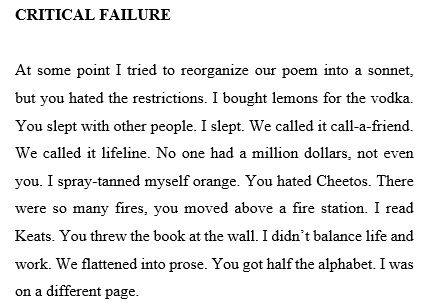
      Read on for a taste of POP and Simina’s thoughts on the poem ‘Critical Failure.’

      POP began as a hodgepodge of short, fragmented pieces trying to capture moments of shifting emotions. In a sense, they were all failures. I attempted a variety of poetic forms searching for a structure that fit the feeling, but nothing quite got there. With time I realized that part of what was interesting was the failure itself—the varied, increasingly desperate attempts. Emotions could not be contained in the structure of a poetic form just as the relationship which had sparked them could not be contained and structured. It was this realization that led to the premise of the section titled ‘on separating from our poem.’

      I’ve always been interested in the various rules and regulations of poetry: the sonnet, with its alternating moments of stress and unstress; the haiku, at once huge and tiny; the epic, with its mythical narrative arcs. I enjoy the way structure collaborates with the words themselves to create multiple layers of meaning. My favourite development, however, is when the poem breaks free. I am reminded of Phyllis Webb’s brilliant ‘Poetics Against the Angel of Death,’ where the speaker navigates—and escapes—all structural constraints to achieve a kind of liberty that is only emphasized by its formal demolition. I aimed toward a similar liberating energy in my work, to take a wrecking ball to past attempts at confinement and rebuild anew.

      Simina Banu

      Purchase your very own copy of POP here! 


      Simina Banu is a writer interested in interrogating her own experience with technology, consumerism, pop culture and the poetics of (un)translation. Her poetry has appeared in numerous journals, including filling Station, untethered, In/Words Magazine and the Feathertale Review. In 2015, words(on)pages press published her first chapbook, where art. Her second chapbook, Tomorrow, adagio, will be released in 2019 through above/ground press. POP is her first full length collection of poetry. She lives and writes in Montreal.

      Connect with Simina Banu on Twitter and Instagram.

      Posted in Guest Authors, Recommended Books | Tagged canadian authors, Canadian poets, CanLit, Coach House Books, Critical Failure, New Releases, poems, poetry, Simina Banu, The Authors' Book Club
    • So, you want to start a Virtual Book Club?

      Posted at 2:09 pm by TheAuthorsBookClub
      Mar 28th

      Guest post by Hannah Mary McKinnon

      As an author, I’ve had the pleasure of being invited as a guest to a number of book clubs, in person and online. Each time has been an absolute pleasure, and what struck me the most was the camaraderie amongst the members, so much so that I decided to start my own book club earlier this year. 

      Enter the COVID-19 pandemic and social distancing measures, which means in-person book club meetings must be postponed, and it might seem crazy to even think of starting a new club. Except we need human connections and something to look forward to more than ever right now, and a virtual book club could add to the comfort we so desperately need. The solution? A virtual book club. Here are some tips to get you started:

      1. Find members

      You can’t have a book club without members but where to find them? I posted in a local Facebook mom’s group and was immediately inundated with replies. Expecting a handful of participants, I couldn’t believe it when over 60 women indicated their interest. That number settled at 17 members after people couldn’t make it because of family and/or scheduling conflicts. 17 is quite a large number for a virtual book club, and I’d suggest having around 10 members so it’s easier to chat with one another online.

      1. Have an introductory meeting online

      Make it a “meet-and-greet” where you introduce yourselves, chat about the genre of books you enjoy (or don’t care for), and talk about the structure of the group. To do this, use a videoconferencing tool such as Zoom. A “pro” subscription for up to 100 participants per meeting costs $20/month, but maybe one of your members has already signed up, and they can set the meetings up and share the link with the members. Participants can mute their mic when not talking to minimize background noise.

      1. Figure out how to pick books

      In my book club, we decided to have five rotating selections: Book Club Picks, Suspense/Thriller, Women’s Fiction, Historical Fiction and “Wild Card” where anything goes. We plan the books two months ahead, members make suggestions on which we vote afterwards, so people have the chance to look up the books first. Having themes means we read a variety of genres, and don’t have the same one multiple months in a row. Alternatively you could have the host pick the book for the next (online) gathering, or go in alphabetical order instead. Maybe you pluck books out of a (virtual) hat. There are many different ways that allow each member to give input.

      1. Create a Facebook Group

      While I initially managed all communication via email, it was much easier to shift everything to a Facebook group. The group is hidden, meaning only members have access, and I scheduled all our events for the rest of the year. The group is also an easy place to share information about upcoming reads, where to find books, and to create the monthly book pick polls on which members can vote. information about upcoming reads, where to find books, and to create the monthly book pick polls on which members can vote.

      1. Invite authors

      Admittedly, this is easier to do when you’re an author yourself and you’ve made connections with other writers, but you might be surprised by how many authors love to be a guest at a book club. The wonders of technology mean you can beam them straight into your chosen location, again by using Zoom. Whether they charge for their time depends on the author, but regardless, sharing photos and reviews of their novels on social media will no doubt be greatly appreciated. Still unsure about inviting an author?  The Authors’ Book Club provides a list of Canadian writers who are happy to join your meeting—all you need to do is ask.

      Creating a book club has been a wonderful experience and an excellent way to find like-minded friends with whom I can share my love of books. We’re living through an unprecedented crisis, and many of us in isolation, feeling disconnected from the world. A virtual book club might be another way for you to make new online connections, and have a ready-made new set of friends you can meet IRL once the pandemic is over.


      Hannah Mary McKinnon was born in the U.K., grew up in Switzerland and moved to Canada in 2010. After a successful career in recruitment, she quit the corporate world in favor of writing. Sister Dear is Hannah Mary’s fourth novel. She lives in Oakville, ON, with her husband and three sons.

      Visit Hannah Mary’s website. Follow her on Twitter, Instagram, and Facebook.

      Posted in book clubs, Guest Authors | Tagged ann y.k. choi, authors, book clubs, books, canadian authors, canadian book clubs, canadian writers, david albertyn, Fiona Ross, Hannah Mary McKinnon, online book clubs, starting a book club, The Authors' Book Club, virtual book clubs
    • Invite an Author to your Virtual Book Club Meeting!

      Posted at 10:57 am by TheAuthorsBookClub
      Mar 19th

      As everyone struggles to make sense of the COVID-19 outbreak and how to stay safe, a Toronto-based writing group, The 11th Floor Writers, held its March meeting using Google Hangouts. This allowed its members to still “meet” face-to-face and engage in a productive meeting without leaving home.

      Virtual book club meetings with a “visiting” author might be one way for authors and book clubs to connect during these uncertain times. They allow book clubs to invite authors from across Canada. There is an abundance of technology that makes this possible. The key is to figure out which works best for individual book clubs and authors. With the exception of calling the author using a telephone, a virtual author visit requires an Internet connection, audio (speakers and microphones), a webcam, and a projector/computer so that the book club and the author can interact with each other. 

      Google Hangouts:

      To use Google Hangouts, one book club member (the host) needs to sign into a Gmail/Google account and go to Google Hangouts. There, hosts can invite members to be their contacts on Hangouts. They can only invite Gmail email addresses. Once the contacts are added, hosts can start a video chat and invite as many as 25 people to participate. 

      Tip: Hosts can also create a group of contacts to make inviting online book club members more efficient. While they can do all this through the web browser, they can also download the Google Hangouts app on any device and use the service that way, all of which is free. The drawback is that everyone involved in the chat must have a Google account, including the author.

      Other options that most of our authors use include Skype, FaceTime, and conference calling.

      Group Video Chat via Skype: 

      What you will need: The Skype app on a smartphone or computer.

      Benefits: Easy for group chats; (up to 50 participants); free.

      Cons: Video connection depends on your Internet connectivity (a slow or intermittent connection can lead to frozen screens or glitches).

      Learn more: Visit Skype’s website.  

      Group FaceTime:

      What you will need: iPhone, iPad or Mac desktop or laptop.

      Benefits: Picture-in-picture allows book clubs and authors to view each other (up to 32 participants); free.

      Cons: FaceTime is incompatible with non-Apple devices.

      Learn more: Visit Apple’s website.

      Conference calls: 

      What you will need: A phone with a speaker.

      Benefits: No need for any other technology/tech set–up.

      Cons: Book clubs and authors cannot view each other; long distance fees may apply.

      Etiquette for virtual meetings:

      • Test all technology before the meeting
      • Introduce everyone at the book club meeting to the author
      • Select a quiet area, free from distractions
      • Ensure all cell phones are on silent
      • Stick to your predetermined author visit time

      Some final tips for book clubs:

      Select one person to be the author’s key contact. Prepare for the virtual visit. Predetermine how long the visit will be (30-45 mins). Take into account any different time zones. Pick a format (e.g., do you want the author to read? Key talking points? Q&A?). Find out about any author fees or requests. Check the quality of your Internet connection, as well as the camera and sound. Have fun!

      Some final tips for authors:

      Check the quality of your Internet connection beforehand. Confirm your meeting times and the length of the online visit ahead of time. Discuss any author fees if applicable.

      If this is your first virtual book club, practise! Look at the camera and not the screen. This will allow you to look out at the book club members. Ensure the space is quiet with minimal background distractions. Avoid interruptions. Turn off your cell phone and let others around you know that you are working. Have fun!

      We’d love to hear from you!

      Share your virtual book club meeting experiences! Tag us on social media using the hashtags #theauthorsbookclub and #inviteanauthor, or email us at theauthorsbookclub@gmail.com.

      Thank you and Happy Reading, everyone!

      Posted in book clubs, General | Tagged ann y.k. choi, book clubs, books, canadian authors, canadian book clubs, Canadian books, CanLit, david albertyn, Fiona Ross, The Authors' Book Club, virtual meetings
    • Skype Visit with Author Jesse Thistle

      Posted at 9:29 pm by TheAuthorsBookClub
      Mar 16th

      Guest post by Toni Duval

      Our book club met on a Friday evening in a lovely country home in Caledon. We planned to connect with Jesse Thistle, author of From the Ashes via Skype, a process that was simple in concept but proved to be a challenge! But we overcame it together. Seated around a large television screen, our author appeared in a hoodie surrounded by darkness. We learned he was on his way home from a spa day and was Skyping from his car while his wife, Lucie, drove them home. 

      We jumped right in with questions for Jesse, almost as if he was sitting in the living room with us. He answered personal questions about the editing process, his mentors, family members, current work and future projects. We were able to share some of our own personal connections to the book. He was gracious with our praise and admiration of his perseverance. 

      Jesse explained how the book began as a part of his steps towards sobriety and how the editors made choices about the material that became the final manuscript, choices he didn’t always agree with and shared a pivotal moment of his life with us. While he was living in Ottawa he begged on the streets for money to buy food. There was a man he saw often who finally introduced himself. He was a podiatrist and offered to get Jesse shoes that would help with his gait. Jesse would not accept the shoes, knowing he would sell them for drugs and wouldn’t allow himself to take advantage of the man’s kindness. 

      Overall, the experience of speaking directly to the author of a book that resonated with all of us was powerful. It is due to Jesse’s generosity with his time. We probably spoke to him twice as long as originally planned. His willingness to share his time and insights with us allowed us to experience a special evening beyond compare. 


      Toni Duval is a member of the Caledon Women’s Book Club.

      Jesse Thistle’s memoir, From the Ashes, was published by Simon & Schuster Canada. He lives in Hamilton, ON, and is available to meet with book clubs via Skype and FaceTime. Learn more about Jesse.

      Posted in book clubs, Recommended Books | Tagged book clubs, canadian authors, canadian book clubs, Canadian books, From the Ashes, Invite An Author, Jesse Thistle, Skyping, The Authors' Book Club, Toni Duval
    • What makes a cozy mystery a great choice for a book club?

      Posted at 9:33 am by TheAuthorsBookClub
      Mar 10th

      Guest post by Lynn McPherson

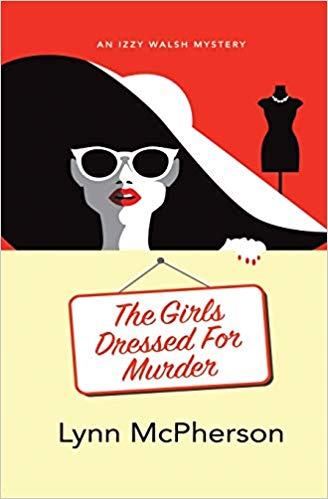
      The Girls Dressed for Murder is a light-hearted, character-driven whodunit set along the New England coastline in the 1950’s. It is the third book in the Izzy Walsh Mystery Series and belongs to a sub-genre of crime fiction called Cozy Mystery. You may want to know the characteristics that define a cozy before choosing one for your book club. Let’s take a look.

      First of all, the violence is done primarily off-stage. There are no gory details in any part of the novel—even the murder itself. In addition, cozy mysteries usually take place in a small town with an amateur sleuth as the protagonist. They are always whodunits and often incorporate a cast of recurring characters in an ongoing series. In The Girls Dressed For Murder, the central characters are all women who befriended one another during the Second World War while working in a munitions factory. Izzy Walsh relies heavily on the support and insight of her friends to help unravel the twisted truth in every case she stumbles upon. 

      Cozy mysteries are a lot of fun. You will shed no tears or experience any restless nights due to disturbing images. At the end of each book, justice has been served and order has been restored. While the books may be a part of a series, each one is a complete novel with no loose ends. 

      What makes a cozy mystery a great choice for a book club? 

      Like any novel, loads of research must be done to get it right. The Girls Dressed for Murder is set in 1958. The clothing, dialogue, cars, and setting were all carefully chosen. Pop culture is rarely the focus of history books, so a discussion of research is always fun. For example, some of the best insights I found were online in old magazines. Thanks to Google, every issue of LIFE magazine is archived. Both the articles and the advertisements were key to help me create the perfect fictional world for my books.

      Let’s not forget the mystery. The best part of a cozy is trying to figure out who is the murderer. A cozy will keep you on your toes. Red herrings and real clues are sprinkled throughout the story—the reader must step into the detective’s shoes to figure out who to trust and where to look.

      So what will you discuss at your next book club if you choose a cozy? Will it be the murder? The characters? The research? Any or all will guarantee an evening full of laughter and fun. 


      Lynn McPherson has worked for the Royal Canadian Mounted Police, ran a small business, and taught English across the globe. She has travelled the world solo, where her daring spirit has led her to jump out of airplanes, dive with sharks, and learn she would never master a surfboard. Lynn serves on the Crime Writers of Canada Board of Directors, currently representing Toronto and Southwestern Ontario, and is the author of the Izzy Walsh Mystery Series. Her latest book, The Girls Dressed For Murder, came out in August 2019.

      Visit Lynn’s website. Follow her on Twitter, Instagram, and Facebook.

      Posted in Guest Authors, Recommended Books | Tagged book clubs, canadian authors, canadian book clubs, cozy mystery, mystery, The Authors' Book Club, The Girls Dressed For Murder
    • A Writer’s Work is Never Done

      Posted at 9:11 pm by TheAuthorsBookClub
      Mar 3rd

      Guest post by Maria Meindl

      My first novel The Work is about a woman who falls in love with the charismatic leader of a theatre group and stays with him for two decades, even though — at least on the surface of things — there’s not a lot in it for her. The question I get asked most often is whether it’s based on personal experience.

      The answer is, yes and no. 

      Have I stayed fruitlessly loyal for years and years? Ooooooh yeah!  And I wanted to get inside that experience in The Work. I have lived through a prolonged romantic obsession; I see these sorts of relationships around me all the time, but they’re not common in literature. They’re difficult to write about. I guess a short, self-destructive love affair provides a better story arc. Yet I’m fascinated with what makes a person stay and stay and stay … and stay. What is she getting out of it?

      Rebecca, my protagonist, is competent — too competent at times — yet she falls prey to someone who manipulates and takes advantage of her. I tried to understand what, in her personality, might make her susceptible, but mostly I wanted to show that anyone is susceptible. 

      And what about the theatre group, SenseInSound, which functions on the borderline between therapy and self-expression, and has many cult-like qualities? I teach a form of movement (Feldenkrais Technique), which required a long, intensive training, and I’ve also participated in various of disciplines that unite body and mind. (And by the way, they’re almost always referred to as The Work.) In my PhD research I’m studying the history of physical culture in 19th and 20th century Europe, so I know the territory.

      I have never had an experience where a leader or teacher abused their power — or not seriously — but I know it happens. And I absolutely see how it can. I drew from my own experiences then speculated … What if…?  What if someone crossed the line right now?

      But I didn’t want to make this aspect of the story cut-and-dried. I didn’t want to show a cult leader pulling people into his orbit and spitting them out as broken souls. People benefit from The Work, or at least, they find a way to present their experiences in a positive light. In the end, The Work is the main character in The Work. It’s beneficial in small doses, but when people entangle themselves with it too closely, it becomes harmful. 

      The theatre company spends a long time in process, continually reshaping its plays, building them, then tearing them down and rebuilding them again. These sections of my book almost wrote themselves, and I think that’s because I love process so much. 

      My fascination with process is the inspiration behind my reading series, Draft, which I founded in 2005 in the Leslieville area of Toronto. We invite both emerging and well-known authors to share their work-in-progress at the readings. Reading new work to a sympathetic audience can sometimes provide more ideas for revision than ten pages of comments. And for the audience, there’s something special about hearing work that is unfinished. It means that you are actually part of the author’s process. You’re part of the writing.

      It took me a long time to write my novel — not because I was keeping some kind of noble distance until it was ready to be shared, but because I couldn’t seem to make The Work work. Of course I got impatient, because I kept running out of money and wanting to do other projects. From an artistic point of view, though, I enjoyed my long engagement with The Work. I prefer being in process to finishing a project. I could have kept on changing the book forever, but I knew it was time finally to polish it up and move on. 

      The Work is the first part of a trilogy, which moves backwards in time. It looks at The Work in different eras. One book takes place in England in the 1950s, and the other is divided between Berlin in the 1930s and 1980s California. These prequels show The Work not just in different, eras but in the hands of different practitioners, and they draw on the historical research I’ve been doing for my PhD. As a writer, I find this daunting project reassuring. It’s always good to know there’s plenty of Work on the horizon!


      Maria is the author of The Work. Her first book, Outside the Box from McGill-Queen’s University Press, won the Alison Prentice Award for Women’s History. Her essays, fiction and poetry have appeared in many publications including The Literary Review of Canada,  Descant and Musicworks, as well as in the anthologies, At the End of Life: True Stories About How We Die and The M Word: Conversations About Motherhood. She has made two radio series, Parent Care, and Remembering Polio for CBC Ideas.

      From 1993 to 2010 she ran The Writing Space Press with Diana Kiesners. She was a member of the editorial board of Descant magazine from 1995 to 2001. In 2005, Maria founded the Draft Reading Series which specializes in unpublished work by emerging and established writers.

      Visit Maria’s website. Follow her on Twitter.

      Posted in Guest Authors, Recommended Books | Tagged book clubs, canadian authors, canadian book clubs, Canadian novels, fiction, Maria Meindl, The Authors' Book Club, The Work, writers, writing process
    • WHAT THE OCEANS REMEMBER: Thinking and Writing with Music

      Posted at 10:00 pm by TheAuthorsBookClub
      Feb 25th

      Guest post by Sonja Boon

      I first picked up the flute when I was 11 (almost 12, I would have said back then). It was Grade 7 and I was one of about ten new flute players that year, all of us sitting in a row and struggling to conjure music from shiny new instruments. I’ll confess that it took me a week to coax anything even resembling a sound out of my flute; it took much longer – and many dizzy spells – to make my way into the second and third octaves. Somehow, thirty-nine years later (yes, that makes me 50 if you’re counting), I’m still playing. Over the years, my flute and my self have become one.

      It might seem odd to begin a blog post about writing a book by reflecting on music making. But here’s the thing: playing the flute taught me to think. It taught me to feel. It taught me to dream. And it also taught me to write.

      I’m no longer a full-time flutist, but I still feel the flute under my fingers, and flute thinking – that is, thinking with sound, air, phrases, and music – continues to influence all of my creative and intellectual work. The music is always there, under the surface. It’s in the way I listen to words on the page, and in how I interrogate the rhythm of the text. It’s in structure. It’s in weight. It’s in the way the text breathes, pauses, stops, lifts, and soars.

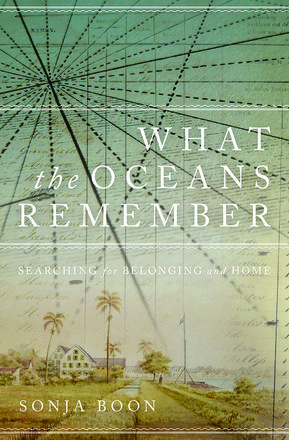
      But in my memoir, What the Oceans Remember: Searching for Belonging and Home, it’s in my heritage, too.

      Music is what first connected me to my ancestors: my musical passions seemed to align with those of my choral director grandfather, a man I barely got a chance to know, but who studied at the same music conservatory as I did, half a century before me. And so, music gave me a way to build a relationship with him across time and space. Music is also one of the things that connects me to my children – my two sons, both of whom have found joy in musical performance (if not in practicing….). 

      But music reaches much further through my family histories.

      Music is the rhythm of the oceans that my ancestors travelled, by choice or by force. It’s the calming rush of waves crashing and retreating along the shore. Music is the sound of voices, the mingling of heritages, languages, traditions. It’s the jangle of bracelets on a wrist, the pull and push of a steam engine, a ship’s horn, the whoosh of a whale spout, birds in flight. Music is the buzzing of insects deep in a rainforest.

      But music is also the sound of silence: it’s the words I’ve never shared with my ancestors, the archival materials that disappeared or never existed at all, the conversations I’ll never be able to recover. In these moments, music resides in suspension, in spaces that only speculation can fill. 

      For a while, the manuscript that became What the Oceans Remember: Searching for Belonging and Home was called “Water Music.” It was an homage to the musical threads that weave through my story, both the overt ones that link me to the generations that came before me, but also the emotional and creative impulses of music making that continue to shape everything about my thinking, writing, and dreaming. 

      What the Oceans Remember is about family, memory, and identity. It’s about politics and history, and about finding ways to live in the present with and through the complexities, challenges, beauty – and also, indeed, horror – of the past. For that kid who picked up a brand-new silver flute way back in 1981, never suspecting where that flute might take her, it’s also – inevitably – about music.


      Sonja Boon is a researcher, writer, teacher, and flutist living in St. John’s. Passionate about stories and storytelling, she is the author of What the Oceans Remember: Searching for Belonging and Home (WLU Press, 2019), a memoir that traverses five continents and spans more than two centuries.

      Sonja’s creative non-fiction essays appear in published collections as well as in Geist, The Ethnic Aisle, and ROOM, among others. In addition to her literary work, Sonja has published three scholarly books and numerous articles and book chapters on a range of topics, from eighteenth-century medical life writing to breastfeeding selfies, and craftivism. For six years, Sonja was principal flutist and a frequent soloist with the Portland Baroque Orchestra (Oregon).

      Visit Sonja’s website. Follow her on Twitter.

      Posted in Guest Authors, Recommended Books | Tagged canadian authors, canadian book clubs, memoir, Sonja Boon, The Authors' Book Club, What the oceans remember
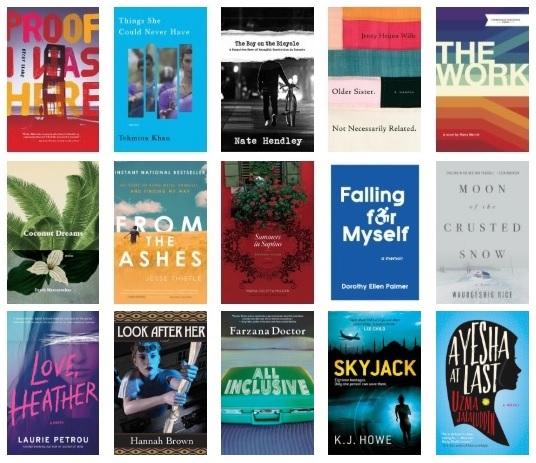
    • Book clubs, choose a book …

      Posted at 3:47 pm by TheAuthorsBookClub
      Feb 6th

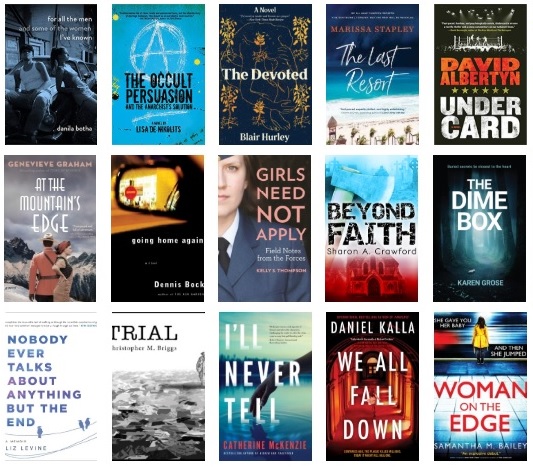
      Use the Search Button (top right) to look up a book title, an author, location (e.g., Vancouver), or key words (e.g., thriller) or visit our Invite An Author page.

      Visit our Invite An Author page to learn more about our amazing authors!

      Posted in Recommended Books | Tagged ann y.k. choi, book clubs, canadian authors, Canadian publishing, canadian writers, CanLit, david albertyn, fiction, Fiona Ross, Indigenous authors, memoirs, Recommended Books, short stories, The Authors' Book Club
    ← Older posts
    Newer posts →
    • For a list of Blog Posts, see the tab ‘NEWS, EVENTS, ETC.’

      • Thank you from the Authors Book Club
      • An Interview With Laura Pratt
      • The Quotable Dennis Bock
      • Plots & Pandemic: Virtual Meet & Greet with Lee Gowan
      • Catching up with David Albertyn
    • Watch our Author interviews, events and more!
    • Follow us on Twitter
  • Enter your email address to follow this blog and receive notifications of new posts by email.

  • Blog Posts by Month

    • April 2024
    • June 2023
    • July 2022
    • April 2022
    • January 2022
    • August 2021
    • July 2021
    • June 2021
    • May 2021
    • February 2021
    • November 2020
    • October 2020
    • September 2020
    • August 2020
    • July 2020
    • June 2020
    • May 2020
    • April 2020
    • March 2020
    • February 2020
    • January 2020
  • Need this text translated?

Blog at WordPress.com.

  • Subscribe Subscribed
    • The Authors Book Club
    • Join 96 other subscribers
    • Already have a WordPress.com account? Log in now.
    • The Authors Book Club
    • Subscribe Subscribed
    • Sign up
    • Log in
    • Report this content
    • View site in Reader
    • Manage subscriptions
    • Collapse this bar
 

Loading Comments...