The Authors Book Club

Connecting readers and authors in Canada
  • Announcement
  • About Us
  • Blog Feed
  • Invite An Author
  • Resources
  • FAQ
  • News, Events, etc.
  • Fiona Reads
  • Writers In Trees
  • Contact
  • Category: Guest Authors

    • WHAT THE OCEANS REMEMBER: Thinking and Writing with Music

      Posted at 10:00 pm by TheAuthorsBookClub
      Feb 25th

      Guest post by Sonja Boon
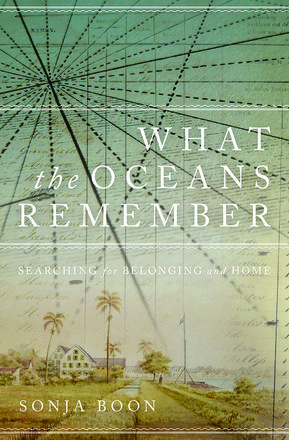
      I first picked up the flute when I was 11 (almost 12, I would have said back then). It was Grade 7 and I was one of about ten new flute players that year, all of us sitting in a row and struggling to conjure music from shiny new instruments. I’ll confess that it took me a week to coax anything even resembling a sound out of my flute; it took much longer – and many dizzy spells – to make my way into the second and third octaves. Somehow, thirty-nine years later (yes, that makes me 50 if you’re counting), I’m still playing. Over the years, my flute and my self have become one.

      It might seem odd to begin a blog post about writing a book by reflecting on music making. But here’s the thing: playing the flute taught me to think. It taught me to feel. It taught me to dream. And it also taught me to write.

      I’m no longer a full-time flutist, but I still feel the flute under my fingers, and flute thinking – that is, thinking with sound, air, phrases, and music – continues to influence all of my creative and intellectual work. The music is always there, under the surface. It’s in the way I listen to words on the page, and in how I interrogate the rhythm of the text. It’s in structure. It’s in weight. It’s in the way the text breathes, pauses, stops, lifts, and soars.

      But in my memoir, What the Oceans Remember: Searching for Belonging and Home, it’s in my heritage, too.

      Music is what first connected me to my ancestors: my musical passions seemed to align with those of my choral director grandfather, a man I barely got a chance to know, but who studied at the same music conservatory as I did, half a century before me. And so, music gave me a way to build a relationship with him across time and space. Music is also one of the things that connects me to my children – my two sons, both of whom have found joy in musical performance (if not in practicing….). 

      But music reaches much further through my family histories.

      Music is the rhythm of the oceans that my ancestors travelled, by choice or by force. It’s the calming rush of waves crashing and retreating along the shore. Music is the sound of voices, the mingling of heritages, languages, traditions. It’s the jangle of bracelets on a wrist, the pull and push of a steam engine, a ship’s horn, the whoosh of a whale spout, birds in flight. Music is the buzzing of insects deep in a rainforest.

      But music is also the sound of silence: it’s the words I’ve never shared with my ancestors, the archival materials that disappeared or never existed at all, the conversations I’ll never be able to recover. In these moments, music resides in suspension, in spaces that only speculation can fill. 

      For a while, the manuscript that became What the Oceans Remember: Searching for Belonging and Home was called “Water Music.” It was an homage to the musical threads that weave through my story, both the overt ones that link me to the generations that came before me, but also the emotional and creative impulses of music making that continue to shape everything about my thinking, writing, and dreaming. 

      What the Oceans Remember is about family, memory, and identity. It’s about politics and history, and about finding ways to live in the present with and through the complexities, challenges, beauty – and also, indeed, horror – of the past. For that kid who picked up a brand-new silver flute way back in 1981, never suspecting where that flute might take her, it’s also – inevitably – about music.
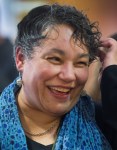

      Sonja Boon is a researcher, writer, teacher, and flutist living in St. John’s. Passionate about stories and storytelling, she is the author of What the Oceans Remember: Searching for Belonging and Home (WLU Press, 2019), a memoir that traverses five continents and spans more than two centuries.

      Sonja’s creative non-fiction essays appear in published collections as well as in Geist, The Ethnic Aisle, and ROOM, among others. In addition to her literary work, Sonja has published three scholarly books and numerous articles and book chapters on a range of topics, from eighteenth-century medical life writing to breastfeeding selfies, and craftivism. For six years, Sonja was principal flutist and a frequent soloist with the Portland Baroque Orchestra (Oregon).
      Visit Sonja’s website. Follow her on Twitter.

      Posted in Guest Authors, Recommended Books | Tagged canadian authors, canadian book clubs, memoir, Sonja Boon, The Authors' Book Club, What the oceans remember
    • Writing THE DEVOTED: the Research and Discipline of Stepping into My Novel

      Posted at 9:45 am by TheAuthorsBookClub
      Feb 18th

      Guest post by Blair Hurley

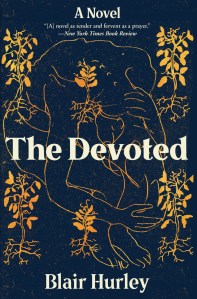
      I wrote my first novel, The Devoted, while still living in my hometown of Boston, fresh out of a grad writing program and keen to tell a story that I felt passionate about. It took four or five years of struggling with scenes and characters and memories from my own childhood, but it didn’t really come together as a story until I realized that I had to step into risky, unknown territory, both from my own realm of experience and also beyond it.

      The Devoted is inspired by both my Irish Catholic roots and my lifelong interest and research into Buddhism in America, particularly the experience of women exploring Buddhist practice. The novel is about a Boston Irish Catholic woman who, disillusioned by the sexual abuse scandals of the church that broke in the early 2000s, converts to Zen Buddhism. After heartbreak and betrayal, she becomes trapped in a manipulative sexual relationship with her Zen Master. The book raises the question of how the #metoo movement can play out in spiritual spaces, where powerful, respected teachers have abused their authority with vulnerable students seeking a spiritual experience. It also explores the healing and redemptive power that faith, both Catholic and Zen, can bring to our lives.

      To write the novel, I had to immerse myself in research about both Catholicism and Zen, reading religious texts, but also Zen poetry, koans, and folktales from Buddhist cultures. I read the fascinating memoirs of medieval Buddhist nuns and was surprised to discover their honest, forthright discussions of the discrimination they encountered. In one Tibetan nun’s account, she sings mournfully of how her Master refuses to believe she can achieve the same level of spiritual accomplishment as the monks that surround her; she defiantly declares she will prove him wrong.

      Many of my readers assume that I’m more familiar with the Catholic portions of the story, but even though my family has Irish Catholic history, I was raised without any particular religious affiliation, free to explore and visit religious spaces without any sort of official allegiance. To write my character’s strict Catholic upbringing, I had to dive deep into Catholic stories, songs, and doctrine, questioning my family about their own memories and jokes and superstitions. When writing scenes set both in Catholic churches and Buddhist Zendos, I felt as much of an outsider as my character, stepping tentatively inside the temple for the first time. What if I got some crucial points of doctrine or ritual wrong? What if I inadvertently disrespected someone else’s sacred space? For the early drafts of my writing, I hovered nervously on the edges of writing these scenes, afraid to offend or to misrepresent, afraid that I didn’t have what it took to write the scene authentically. Writers often struggle with this question of authenticity — do I dare tell this story? Is it my story to tell? Can I do this story justice?

      For me, the line came when I realized I had written cautiously around the edges of the real issues I wanted to address. To really show my character’s experience on the page — with her family, with her Zen Master, singing in church and running away from it, fighting with her brother and falling in love and betraying people all on her messy quest for personal grace — I had to walk into those rooms with her. I had to do my homework, get the research right, walk into those spaces myself whenever I could, and in my imagination when I couldn’t. I visited Zen and Tibetan temples, and wandered in and out of Catholic churches; I read and listened; and at some point, when I had done the work, I had to sit down at my desk, take a deep breath, and begin.


      Blair Hurley is the author of The Devoted published by W.W. Norton and Penguin Random House Canada. The novel was longlisted for The Center for Fiction’s First Novel Prize. Her work is published or forthcoming in Electric Literature, The Georgia Review, Ninth Letter, Guernica, Paris Review Daily, West Branch, and elsewhere. She received a 2018 Pushcart Prize and scholarships from Bread Loaf, Hawthornden Castle, and the Ontario Arts Council.

      Visit Blair’s website. Follow her on Twitter, Instagram, and Facebook.

      Posted in Guest Authors, Recommended Books | Tagged Blair Hurley, book clubs, fiction, The Authors' Book Club, The Devoted
    Newer posts →
    • For a list of Blog Posts, see the tab ‘NEWS, EVENTS, ETC.’

      • Thank you from the Authors Book Club
      • An Interview With Laura Pratt
      • The Quotable Dennis Bock
      • Plots & Pandemic: Virtual Meet & Greet with Lee Gowan
      • Catching up with David Albertyn
    • Watch our Author interviews, events and more!
    • Follow us on Twitter
  • Enter your email address to follow this blog and receive notifications of new posts by email.

  • Blog Posts by Month

    • April 2024
    • June 2023
    • July 2022
    • April 2022
    • January 2022
    • August 2021
    • July 2021
    • June 2021
    • May 2021
    • February 2021
    • November 2020
    • October 2020
    • September 2020
    • August 2020
    • July 2020
    • June 2020
    • May 2020
    • April 2020
    • March 2020
    • February 2020
    • January 2020
  • Need this text translated?

Blog at WordPress.com.

  • Subscribe Subscribed
    • The Authors Book Club
    • Join 96 other subscribers
    • Already have a WordPress.com account? Log in now.
    • The Authors Book Club
    • Subscribe Subscribed
    • Sign up
    • Log in
    • Report this content
    • View site in Reader
    • Manage subscriptions
    • Collapse this bar
 

Loading Comments...